

Appointing the wrong distributor in Malaysia does not just cost a brand its first-year sales targets, it costs market position, retailer goodwill, and the time needed to find, appoint, and re-educate a replacement. Based on our review of distributor networks across FMCG categories in Malaysia, the majority of underperforming brand launches trace back to an inadequate pre-appointment process. The checks below are the ones we consider non-negotiable before any agreement is signed.
Why the appointment decision carries more risk than most brands expect
Most brands enter the distributor selection process focused on reach: how many outlets can this partner cover, and how quickly can product get to shelf. That is a reasonable starting point, but it frames the decision as a commercial question when it is equally a risk-governance question.
A distributor holds the brand’s route-to-market. If that partner encounters a financial shock, loses a major anchor client, or simply lacks the sales infrastructure to manage the brand’s requirements, the consequences fall on the brand, in the form of out-of-stocks, delisted SKUs, and damaged relationships with retailers who do not distinguish between a distributor’s failure and the brand’s.
The appointment process should be structured accordingly. The five checks below apply whether the brand is entering Malaysia for the first time or replacing an existing underperforming partner. Each check is designed to surface a specific category of risk before the contract is signed.
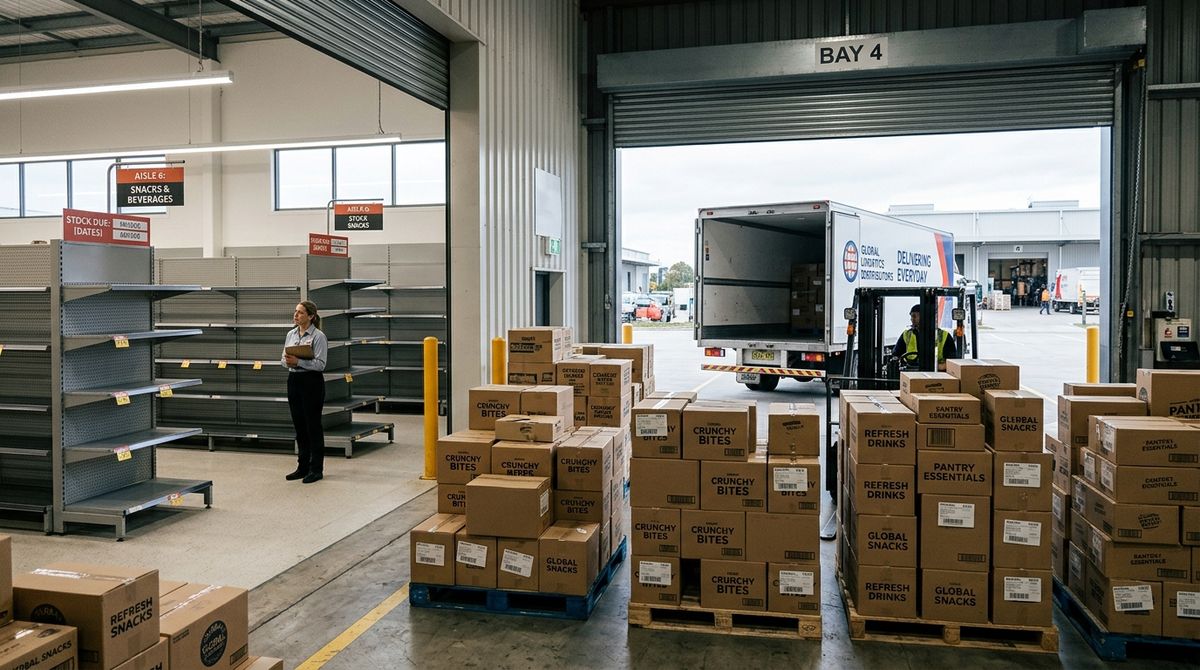
Five checks to run before signing any distributor agreement
These five checks function as a decision framework. No single check is sufficient on its own, a distributor with strong coverage but weak financials is still an exposure, as is one with excellent infrastructure but no accountability structure for field performance. Run all five, document the responses, and treat gaps as negotiating points or disqualifying criteria.
Check 1, trade coverage and channel fit
The first question is whether the distributor’s existing customer base actually overlaps with the brand’s target channels. In Malaysia, those channels include pharmacy chains (such as Guardian and Watsons), independent pharmacies, hypermarkets, supermarkets, minimarkets (small self-service convenience stores, often in residential areas), provision shops (traditional Chinese-run grocery shops, a significant channel in general trade), baby specialty stores, and e-commerce platforms.
Ask for a named account list, not a category claim. A distributor that says “we cover pharmacies across Malaysia” is not providing useful information. A distributor that provides a customer list showing 400 independent pharmacies in the Klang Valley (greater Kuala Lumpur and Selangor), 200 in Penang, and 150 in Johor Bahru is giving the brand something it can cross-reference against its own retail target list.
The recommendation is to verify coverage in writing and to map it against a prioritised outlet list before discussions progress. Any distributor that cannot provide a channel breakdown by outlet type and region should be flagged immediately.
Check 2, financial standing and business continuity
A distributor’s financial health is a direct measure of its operational resilience. Request audited financials for the last two years. What we look for is not simply profitability, but signs of concentration risk: a distributor that derives more than 60% of revenue from one or two principals is exposed if those relationships change. That exposure becomes the brand’s problem the moment the agreement is signed.
Beyond the financials themselves, ask about credit facilities with key retailers, payment history with current principals, whether warehouse assets are owned or rented, and what insurance coverage the business carries. Concentration and interdependency risk are specifically identified under Malaysian regulatory guidance as areas requiring active assessment, and the same logic applies when evaluating a distribution partner. A distributor that cannot demonstrate financial resilience is a continuity risk, not just a commercial one.
Check 3, operational capacity and infrastructure
Physical and logistical capability is the foundation of everything else. For a distributor operating in Malaysia, the relevant checks cover warehouse size and location relative to target markets (Peninsular Malaysia and East Malaysia, which covers Sabah and Sarawak, operate as distinct markets with different logistics requirements), cold chain capability for applicable categories, fleet size, delivery frequency by channel, and what order management systems are in place.
Ask directly whether the distributor runs its own logistics or subcontracts. Subcontracting is not automatically a problem, many reputable distributors use third-party logistics for specific routes, but the brand needs to understand the dependency chain. At Lim Soon Huat Group, we operate four distribution centres totalling over 105,000 square feet, with direct coverage across the Central Region and Pahang. That visibility into the supply chain is something brands should expect from any serious partner.
For food, health, personal care, and baby care categories, also check halal handling protocols and storage compliance. Halal certification in Malaysia is governed by JAKIM (the Department of Islamic Development Malaysia), and brands should verify that the distributor’s warehouse and handling procedures are consistent with their product’s certification requirements.
Check 4, sales team structure and management accountability
Field capability is the check that most brands approach too superficially. Asking “how many sales reps do you have?” is not enough. The relevant questions are: how many are dedicated to key account management versus general trade field sales, how many merchandisers are deployed, what reporting structure connects field performance to senior management, and how are individual account targets set and reviewed.
A distributor without named account managers and a reporting structure that reaches senior management is a governance risk. Based on field observation, brands that skip this check frequently discover after appointment that their SKUs are managed by a single overextended sales representative covering dozens of accounts across multiple categories. Understanding how a distributor’s sales team actually operates before signing is one of the clearest predictors of post-launch distribution attainment.
Check 5, principal references and track record
Contact two or three current or former principals in adjacent categories. Ask direct questions: how does the distributor communicate during supply disruptions, do issues get escalated or absorbed silently, and did the distributor hit agreed distribution targets within the first six months of appointment?
This is the most reliable signal of post-appointment behaviour, and it is also the check brands are most likely to skip. The field data is consistent on this point: distributor references predict appointment outcomes more accurately than any other single input. A distributor that is reluctant to provide references, or that provides only references it has clearly pre-selected, is itself a signal worth taking seriously.

Legal and compliance checks that protect the brand
These checks are non-negotiable and should be completed before any commercial terms are discussed.
Verify company registration and SSM (Companies Commission of Malaysia) status. Confirm SST (Sales and Service Tax) compliance and whether the distributor holds the relevant import permits or product registration licences for the category. For international brands entering Malaysia, product registration is managed by the NPRA (National Pharmaceutical Regulatory Agency, under the Ministry of Health, known locally as KKM) for health and personal care products. Brands should consult directly with the relevant authority to confirm requirements.
Ask whether the distributor has experience managing NPRA submissions, halal certification coordination with JAKIM, or other regulatory filings relevant to the category. A distributor that has no experience with these processes will add months to the brand’s time-to-shelf. Also check for any active litigation and confirm that the distributor carries adequate product liability insurance.
How to assess concentration risk and dependency exposure
Concentration risk runs in two directions, and both matter. The first is the brand’s dependency on a single distributor for all of its Malaysia volume, if that partner encounters a major disruption, the brand has no fallback. The second is the distributor’s dependency on a single principal. A distributor that relies on one anchor brand for the majority of its revenue is structurally fragile in a way that affects every other brand it carries.
Annual testing of business continuity protocols is considered best practice precisely because resilience is not static, it needs to be verified regularly. When assessing a potential distributor, ask whether they have a recovery strategy that is specific to their risk profile, not a generic continuity document. Ask what percentage of their current revenue this appointment would represent, and what their contingency plan looks like if a primary customer or logistics provider were to exit.
For brands building their Malaysia route-to-market from the ground up, the question of whether a single-distributor model is appropriate for their scale is worth addressing early. A split-channel approach, dividing modern trade and general trade between two partners, reduces concentration exposure but adds coordination complexity. Understanding the trade-off between distributor models and direct approaches before committing to a structure saves significant remediation time later.
What to build into the agreement before day one
The pre-appointment checks above are only as useful as the contractual protections that convert them into enforceable obligations. The agreement should include minimum purchase commitments with review periods, distribution KPIs tied to specific channels and outlet types, data-sharing clauses covering both sell-in and sell-out reporting, and termination notice periods that give the brand adequate time to appoint an alternative partner if needed.
Brand protection provisions matter particularly for international brands unfamiliar with Malaysia’s market structure. These cover pricing integrity, promotional approval processes, and restrictions on sub-distribution without the principal’s consent.
The escalation framework deserves its own clause. The agreement should define who contacts whom, through what channel, and within what timeframe, in the event of a supply disruption, product recall, or significant retailer complaint. These provisions are rarely included in first drafts and almost always matter later. Clear escalation procedures and communication plans are a core requirement of sound operational governance, not an optional addition.
The ongoing review that most brands neglect
Appointment checks do not end at contract signing. The recommendation is to build a formal distributor review into the annual commercial calendar, covering coverage attainment against agreed targets, service level performance by channel, financial health indicators, and regulatory compliance. Tracking these metrics consistently gives the brand the data it needs to renegotiate terms, remediate underperformance, or make a replacement decision without losing market ground in the process.
Brands that run annual reviews retain the evidence base to act decisively. Those that do not are often the ones scrambling to explain to their regional leadership why a launch that looked promising in year one has stalled.
If the checks above raise questions about how to structure a distributor relationship in Malaysia, or if a brand is weighing whether its current distribution arrangement is delivering what it should, the Lim Soon Huat Group partnerships team is available to discuss it. Start the conversation at /partner-with-us.