

Choosing the best distributor for a brand in Malaysia is one of the highest-leverage commercial decisions a brand owner will make. Get it right and the brand compounds. Get it wrong and the costs are not just operational: they show up in lost shelf placements, delayed market entry, and channel conflicts that take years to untangle. This guide works through the selection criteria, evaluation process, regulatory landscape, and commercial structure that determine whether a distributor relationship drives growth or stalls it.
Why distributor selection defines brand performance in malaysia
Malaysia is a market worth taking seriously. The IMF projects GDP growth of 4.7% in 2026, and the country’s position as an ASEAN trade hub, with 17 active trade agreements including RCEP and CPTPP, gives brands entering here genuine regional leverage. For FMCG brands in personal care, food, health, baby, home care, or pet care, Malaysia is frequently the entry point for wider Southeast Asian expansion.
But the market’s opportunity is inseparable from its complexity. Trade channels are fragmented: modern trade (hypermarkets, supermarkets, convenience chains) coexists with a wide general trade network of provision shops, mini-markets, Chinese medical halls, and independent pharmacies. Each channel has different margin expectations, purchasing rhythms, and compliance requirements. A distributor that performs well in one channel often has limited reach in another.
The cost of a poor distributor match is measurable. Brands typically lose 12 to 18 months of commercial momentum when they switch distributors mid-rollout. Stock-outs in year one reduce reorder rates from retailers. Channel conflict, where the same SKU appears at inconsistent prices across trade, damages the brand’s pricing integrity before it has established any. The selection decision is not an administrative step: it is a growth decision.
Five drivers of a high-performance distributor
After working with brands across categories and market entry stages since 1967, we have identified five drivers that consistently separate high-performing distributor relationships from ones that plateau. Each driver maps to a business outcome: revenue, margin, time-to-shelf, compliance, or long-term brand equity. Brands that evaluate distributors against all five are significantly better positioned than those that lead with margin negotiation alone.
Driver 1: market reach across the right channels
Distributor coverage claims are rarely what they appear. A distributor who states it serves 10,000 outlets has told the brand very little. The question that matters is how many of those outlets are actively purchasing and at what velocity.
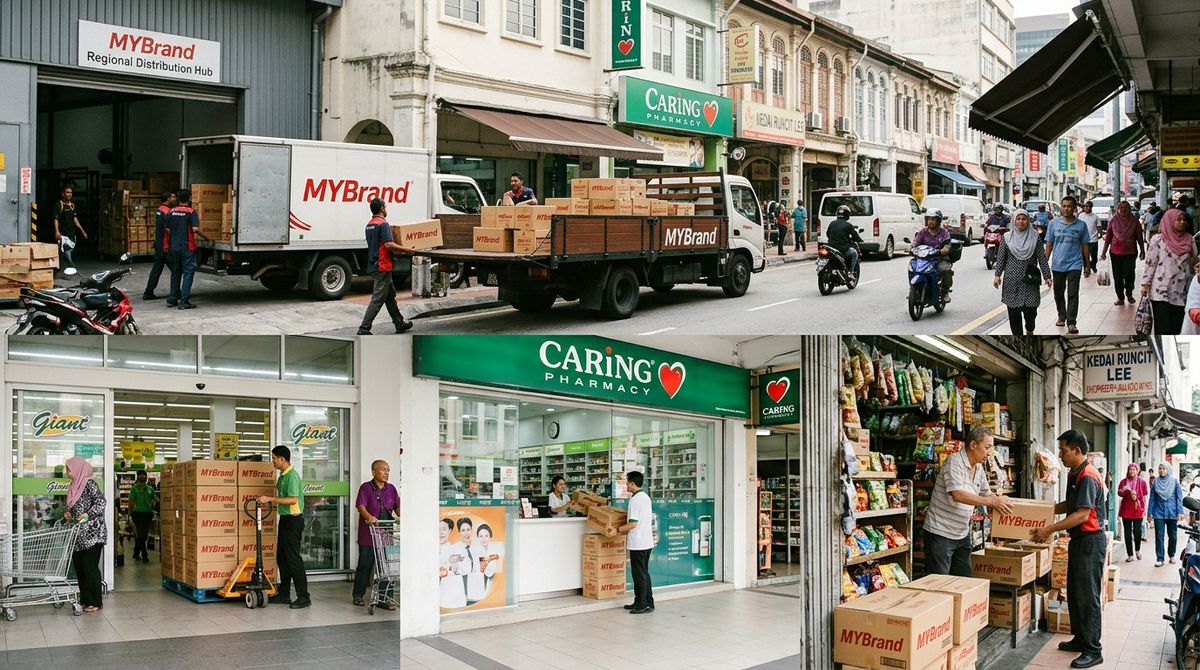
In Malaysia, the relevant trade channels are modern trade (Giant, Aeon, Jaya Grocer, Lotus’s), pharmacy chains (Guardian, Watsons, independent pharmacies), mini-markets, provision shops (small Chinese-run grocery stores that are the backbone of general trade in Peninsular Malaysia), baby specialty stores, Chinese medical halls, and e-commerce platforms, particularly Shopee, Lazada, and TikTok Shop. Each has different stocking behaviour and consumer profile.
The recommendation is to request SKU velocity data by channel from any shortlisted distributor, not just an outlet count. A distributor with 5,000 genuinely active general trade doors delivering weekly sell-through on comparable brands is worth more to most FMCG brands than a distributor with 15,000 nominal outlets and thin coverage outside the Klang Valley.
Driver 2: technology and data capability
The gap between distributors on technology is wide, and it has direct consequences for margin. Distributors with live ERP systems, sell-out reporting by SKU and channel, and demand forecasting tools allow brands to manage inventory proactively. Distributors running on manual order sheets and monthly summary reports create blindspots that result in stock-outs at fast-moving doors and overstock at slow ones. Both outcomes erode margin.
Technology adoption in the distributor sector now extends beyond ERP to include AI-driven demand prediction, automated reordering, and digital marketing support for e-commerce platforms. For brands with Shopee or Lazada presence, a distributor that actively manages platform content, promotions, and fulfilment is a meaningfully different partner from one that simply lists SKUs and waits for orders.
Make sell-out reporting a non-negotiable part of due diligence. Brands that cannot see real consumer demand at channel level are flying without instruments.
Driver 3: regulatory and compliance expertise
Malaysia’s import and tax environment has become materially more complex over the past two years. From July 2025, a revised sales and service tax structure applies: 5% on non-essential imports, 10% on premium goods, with essentials such as medicines and rice exempt. From January 2024, a 10% sales tax applies to low-value goods sold online costing RM500 or below. These are not theoretical complications: they affect landed cost, recommended retail price architecture, and channel economics.
A distributor that misreads HS code classification or applies the wrong tariff treatment adds hidden cost to every shipment. Malaysia’s simple average MFN tariff rate is 5.5%, with raw materials, essential foodstuffs, and pharmaceuticals often qualifying for reduced or zero duties. The right distributor understands which HS codes apply to each SKU and can advise on exemption applications, though brands should verify all tariff classifications directly with the Royal Malaysian Customs Department.
For categories sold into Muslim-majority consumer segments, Halal certification is not optional. JAKIM (the Department of Islamic Development Malaysia) is the certifying authority. A distributor with demonstrated experience in Halal documentation processes removes a significant compliance burden from the brand’s market entry timeline.
Driver 4: supply chain efficiency
Warehouse location, cold chain capability, fleet size, and route optimisation are operational factors that show up directly in time-to-shelf and cost-to-serve. For brands entering Malaysia from outside the region, the speed at which a distributor can clear customs, move product to warehouse, and execute first delivery runs is a commercial priority, not a background detail.
Sustainable logistics practices, including electric delivery vehicles, consolidated shipments, and real-time route tracking, reduce operating costs and support brands that carry ESG commitments in their home markets. At Lim Soon Huat Group, we operate four distribution centres totalling over 105,000 square feet across Kepong, Sungai Buloh, and Kuantan, with a fleet of 30+ trucks covering Central Region and Pahang directly. For international brands, understanding a distributor’s geographic coverage model, whether direct or through managed sub-distributor partners for outer regions, is part of the initial brief.
Driver 5: commercial alignment
The commercial structure of a distributor relationship is where misalignment causes the most damage. Minimum order quantities, payment terms, promotional investment expectations, and exclusivity clauses can all create friction between international brand expectations and local market realities.
Malaysian distributors typically operate on shorter payment cycles from retailers than international brands anticipate, and cash-flow pressure on a distributor translates directly into deprioritised brands when shelf space allocation decisions are made. Before signing, review at least three years of a distributor’s brand portfolio. High principal churn (brands coming and going every 12 to 18 months) is a signal worth investigating before it becomes a first-hand experience.
Types of distributors operating in malaysia
Understanding the landscape of distributor models allows brands to self-qualify which type fits their go-to-market strategy before approaching potential partners.
Full-service national distributors
These distributors cover modern trade, general trade, and pharmacy nationwide. They suit brands targeting rapid national scale and are equipped to handle high SKU volumes across multiple channels. The trade-off is real: larger distributors have higher minimum order thresholds and their sales teams manage large portfolios, so newer or smaller brands receive less dedicated attention. Brands with limited trade marketing budgets often find that their SKUs sit on the shelf without proactive support.
Channel-specialist distributors
Channel-specialist distributors focus on a single trade type, such as pharmacy chains, baby specialty stores, pet stores, or the horeca channel. The data from practice shows that channel specialists deliver higher in-store execution standards within their focus trade, because their sales teams know the buyer relationships and planogram requirements of that specific environment. Brands with a defined consumer segment, a maternal health product targeting TCM pharmacies or a premium pet food targeting specialty pet stores, often achieve better velocity and visibility through a channel specialist than through a generalist with broader but shallower reach.
For brands that want to understand how a distributor’s role shapes brand outcomes across different channel types, the distinction between generalist and specialist is a useful starting point.
Regional distributors
Regional distributors cover a specific geography: Klang Valley, East Malaysia (Sabah and Sarawak), or the East Coast states of Peninsular Malaysia (Pahang, Terengganu, Kelantan). Brands building presence incrementally, or testing product-market fit before committing to national rollout, often start with a regional partner. The investment is lower, the feedback loop is faster, and the brand retains flexibility to expand with a different partner structure once the model is proven.
E-commerce-first distributors
Distributors whose primary channel is online marketplaces and direct-to-consumer platforms serve a specific need. For digitally native brands or those testing product-market fit before entering physical trade, Shopee, Lazada, and TikTok Shop are the dominant platforms. E-commerce-first distributors manage store fronts, promotional mechanics, fulfilment, and customer reviews. The limitation is that online distribution alone does not build physical retail presence, and brands that want to migrate into general trade later will need a different partner with on-the-ground sales infrastructure.
How to evaluate a distributor’s track record
Due diligence on a potential distributor is best structured as a four-phase review. Each phase surfaces different risks.
Phase 1: portfolio and principal analysis
Request a full list of brands the distributor has held over the past five years, not just the current portfolio. What matters is principal retention rate. A distributor that cycles through principals every 18 months either takes on brands it cannot support or manages relationships poorly. Neither is acceptable. Look for multi-year retention of brands in a similar category and scale to the brand being placed.
This is also where competitive conflict screening happens. A distributor holding a direct competitor’s brand in the same category is a structural conflict that affects sell-out prioritisation, promotional resource allocation, and information handling.
Phase 2: field capability assessment
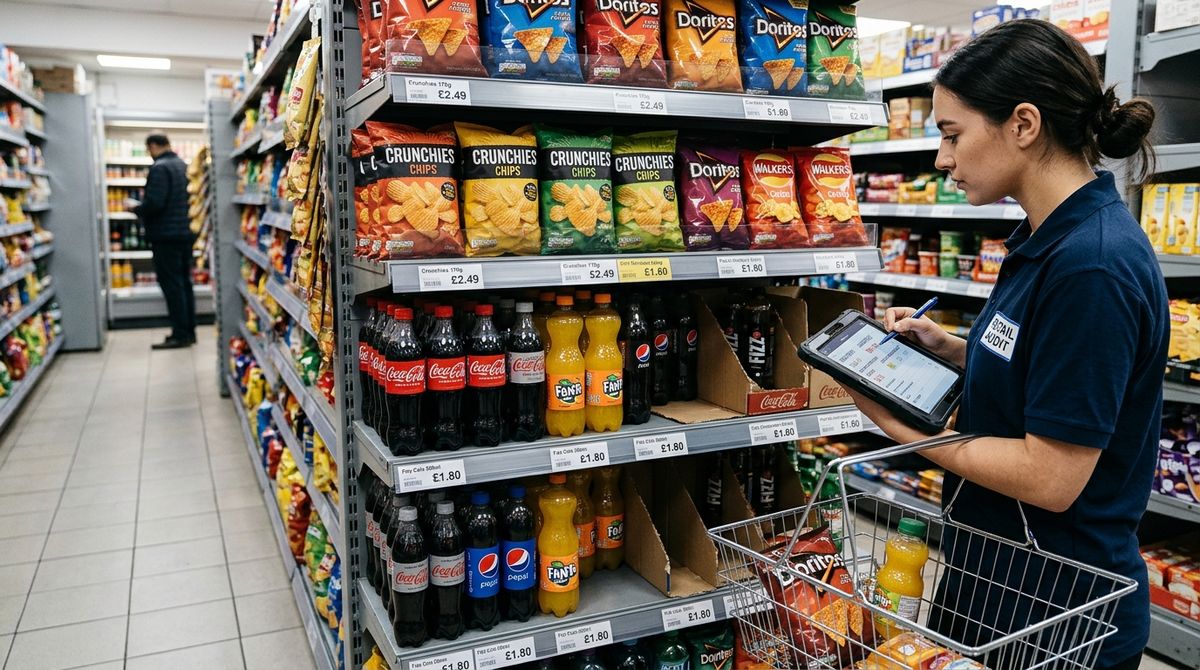
Conduct a blind trade audit of the distributor’s existing brands before signing. Visit a cross-section of the distributor’s declared outlets: check shelf share, planogram compliance, pricing integrity, and merchandising standards. First-hand observation of execution quality is more reliable than any sales presentation. If the distributor’s current brands are poorly merchandised, inconsistently priced, or absent from declared outlets, those conditions will apply to the brand being placed.
This due diligence process is worth doing thoroughly. For brands that want a structured approach to what to verify before appointing a partner, the field audit is the highest-value step in the process.
Phase 3: financial and operational health
A financially stretched distributor prioritises brands with the fastest cash conversion. Slower-moving brands, which includes most new market entrants in their first six months, get deprioritised when cash flow tightens. Assess the distributor’s credit terms with trade, inventory financing capacity, and warehouse throughput relative to its declared SKU count.
Margin expectations vary significantly between distributor models. Understanding the distributor’s cost structure prevents misaligned negotiation and sets realistic expectations on recommended retail pricing architecture.
Phase 4: data and reporting standards
Confirm whether the distributor provides sell-out data (what consumers actually buy off the shelf) or only sell-in data (what the distributor invoices to retail). These are not interchangeable. Sell-in data tells the brand what left the warehouse; sell-out data tells the brand what consumers are purchasing. Brands that accept sell-in data only lose visibility into real demand patterns, cannot identify stock-outs or overstock at outlet level, and cannot make informed production or promotional decisions.
Make sell-out reporting, ideally weekly by SKU and by channel, a contractual obligation from the outset.
Regulatory considerations that affect distributor choice in malaysia
Malaysia’s regulatory environment for imported FMCG products is specific enough to function as a selection criterion in its own right.
Import duties, tariffs, and exemptions
Malaysia’s simple average applied MFN tariff rate stood at 5.5% in 2024, with agricultural products averaging 7.0% and non-agricultural products at 5.3%. Raw materials, machinery, essential foodstuffs, and pharmaceutical products are typically either non-dutiable or face lower tariff rates. Brands should not assume their product category qualifies for a reduced rate without verifying the applicable HS code with the Royal Malaysian Customs Department.
A distributor that understands tariff classification adds real value to the import process. One that does not adds cost and delay. Brands should ask prospective distributors to demonstrate how they have handled HS code classification for products similar to those being imported.
Sales and service tax changes from 2024 onwards
Two changes affect brands entering Malaysia now. From January 2024, a 10% sales tax applies to low-value goods sold online costing RM500 or below, which affects any brand planning an e-commerce-led launch. From July 2025, a revised SST structure applies 5% to some non-essential imports and 10% to premium goods, with essentials exempt. These rates affect landed cost calculations, channel economics, and the retail price that remains competitive at shelf.
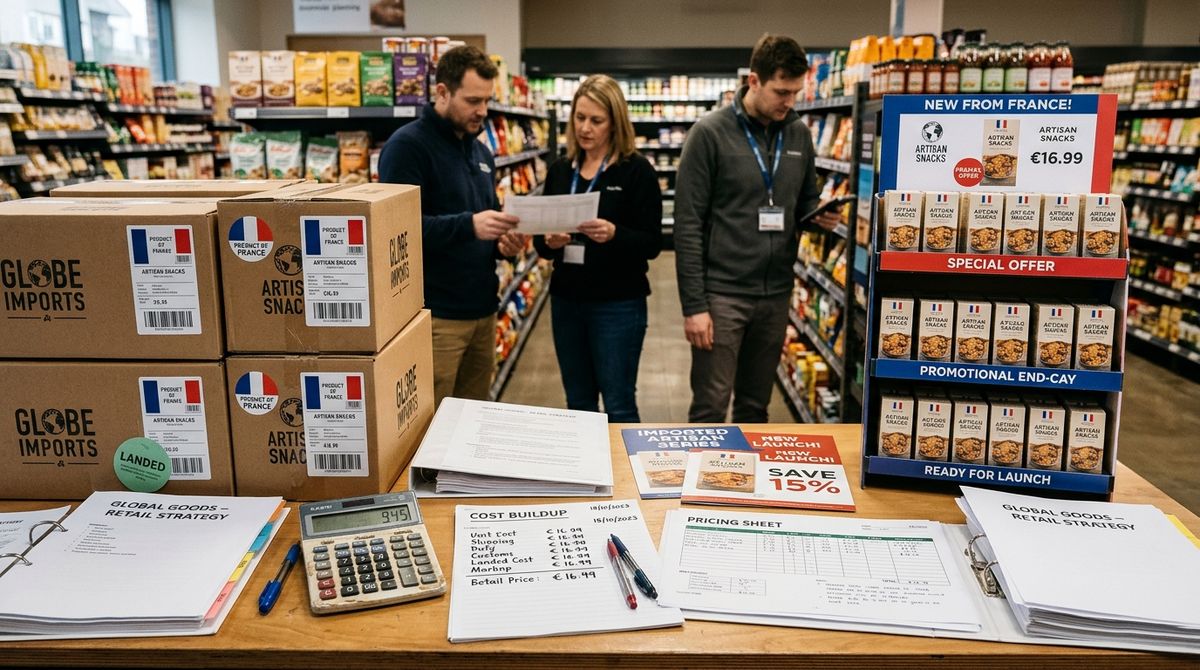
Brands should work through the full price-to-shelf calculation with any prospective distributor, factoring in tariff, SST, distributor margin, and retailer margin, before finalising the market entry pricing strategy. For regulatory confirmation, check with the Royal Malaysian Customs Department directly.
Halal certification and category-specific compliance
Halal certification is a mandatory import requirement for meat and poultry products entering Malaysia. For personal care, food, and health supplement brands targeting Malaysia’s Muslim-majority consumer base, Halal certification is a commercial advantage that significantly broadens retail eligibility. JAKIM is the certifying authority. The process has specific documentation requirements and lead times that need to be factored into the market entry timeline.
Select a distributor with demonstrated experience handling JAKIM processes. A distributor that has not managed Halal documentation before will add time and uncertainty to the approval process. Verify all specific Halal requirements directly with JAKIM.
Budget and commercial structure: what to expect
Brands entering Malaysia for the first time consistently underestimate the full cost of market entry through a distributor. The margin the distributor takes is only one component of the total commercial investment.
Distributor margin expectations by channel
Margin expectations differ materially across channels. Modern trade generally involves the highest trade investment because of listing fees, promotional requirements, and retailer-imposed promotional compliance. General trade carries lower headline margin expectations but requires more feet on the ground to cover the outlet base cost-effectively. Pharmacy chains sit between the two, with varying requirements depending on whether the product is positioned as a health product or a personal care product.
The practical implication is that the same recommended retail price may deliver very different brand margins depending on which channel the product enters through. Modern trade is not always the right first channel; for many emerging brands, general trade or pharmacy delivers faster velocity with lower upfront investment.
Investment beyond margin: what distributors expect brands to fund
Beyond the distributor’s margin, brands should budget for listing fees (particularly in modern trade), promotional funds (trade discounts, gondola end placements, digital platform promotions), merchandising costs, and launch activation. This is a co-investment model: distributors allocate execution resource to brands that demonstrate investment in the brand.
The observation from practice is consistent: brands that budget zero trade support in year one rarely achieve meaningful distribution depth by year two. The brands that grow are the ones that arrive with a funded trade plan, not just a product.
When to negotiate exclusivity, and when not to
Exclusivity makes commercial sense when the distributor is making a genuine investment in brand building, covering launch activation, funded headcount, or geographic expansion. It becomes a liability when the distributor is under-performing and the brand cannot exit without a contractual dispute.
The recommendation is time-bound exclusivity with performance milestones built into the contract. Define what weighted distribution, sell-out velocity, and outlet count the distributor commits to achieving by specific dates, and tie exclusivity renewal to those milestones rather than to calendar time alone.
Common mistakes brands make when selecting a distributor
Five failure patterns appear consistently across brand relationships that underperform.
The first is prioritising distributor size over category fit. A large distributor with no experience in the brand’s category will allocate it to a generalist sales team with competing priorities.
The second is accepting sell-in data as a proxy for market performance. Volume leaving the warehouse is not the same as volume reaching the consumer.
The third is signing long-term exclusivity without performance triggers. Exclusivity without milestones removes the incentive for the distributor to invest past the honeymoon period.
The fourth is underestimating the cost of regulatory non-compliance at import. A single HS code misclassification can delay a shipment, generate unexpected duties, or result in a recall. The cost is not just financial: it is the retailer relationship and the brand’s credibility at trade.
The fifth is selecting a distributor with no e-commerce capability. Online FMCG in Malaysia is growing, and brands that enter with an offline-only partner limit their channel options in a market where Shopee and TikTok Shop are increasingly where consumer trial begins.
Building a long-term distributor partnership
Selection is the beginning. The distributor relationship that performs over three to five years is built on operational discipline and clear governance, not on the goodwill of the launch period.
Setting KPIs that tie to business outcomes
Revenue targets alone are insufficient as a performance measure. The KPIs that actually reflect distributor performance are weighted distribution (what percentage of target outlets are actively stocking the brand), out-of-stock rate by channel, promotional compliance rate, and sell-out growth versus category trend.
A quarterly business review structure with named KPIs, not just revenue discussions, creates the accountability cadence that sustains distributor performance. Without it, underperformance goes unaddressed until it has compounded into a distribution problem that takes two to three quarters to reverse.
Technology integration between brand and distributor
Brands and distributors that operate on disconnected systems spend a disproportionate amount of commercial time reconciling data rather than acting on it. Shared forecasting tools, ERP connectivity, and digital order management remove the reconciliation burden and allow both parties to respond to sell-out signals in near real time.
For brands assessing what a distributor actually brings to an FMCG relationship beyond logistics, technology integration is increasingly where the value differential between distributor partners shows up.
When to change distributors, and how to do it cleanly
The indicators that a distributor relationship has reached its limit are specific: declining sell-out against a growing category, deteriorating shelf standards across the outlet base, loss of key modern trade or pharmacy accounts, and poor or delayed data quality. When three or more of these appear together, the relationship has structurally changed.
Transitioning to a new distributor requires careful contractual and operational management. Stock in the outgoing distributor’s warehouse needs to be accounted for and transferred. Retailer accounts need continuity of service during the handover. The contractual exit mechanics, notice periods, non-compete clauses, brand asset ownership, should be agreed at the beginning of the relationship, not negotiated under pressure at the end.
For a full view of how to conduct distributor due diligence before signing, including what contractual protections to put in place from day one, the investment in advance preparation repays itself many times over.
The recommendation: match the distributor to the brand’s growth stage
The right partner for market entry is rarely the right partner for national scale. This is not a failure of the relationship: it reflects the fact that the brand’s needs change as the business grows.
For a brand entering Malaysia for the first time, the priority is a distributor with demonstrated category expertise, clean compliance processes, sell-out reporting capability, and a realistic commitment to the brand’s size. National scale and full-channel coverage can wait until the brand has established velocity data and retail credibility.
For a brand seeking national expansion, the priority shifts to weighted distribution, field force depth, and technology infrastructure. For a brand reviewing an existing distributor relationship, the Five Drivers framework above provides the structure for an honest audit of where performance has drifted.
The practical next step is to build a shortlist of three to five distributors, score each against the Five Drivers and Four Phases of due diligence described in this guide, and conduct field audits on each shortlist candidate’s existing brands before contract execution. The field audit is the step most brands skip. It is also the step that surfaces the most consequential information.
If a conversation about how Lim Soon Huat Group approaches brand partnerships across LSH and ALSH would be useful, the partnerships team is available at /partner-with-us.