

Most brand owners calculate the cost to work with a distributor as a single number: the margin given away. That framing misses three-quarters of the actual cost structure, and it is the most common reason distribution partnerships in Malaysia underperform against expectation.
What “cost” actually means in a distribution partnership
The strategic stake here is straightforward. When a brand enters Malaysia through a distributor, it is not simply paying for a sales function. It is buying access to shelf space, retailer relationships, warehousing, regulatory navigation, and in-market execution. Each of those services carries a price, and not all of those prices appear on the front page of the commercial proposal.
The real cost calculation has four distinct components: trade margin, operational fees, compliance costs, and opportunity cost. Undershooting this analysis does not just affect profitability. It distorts the entire evaluation of whether a distribution partnership is working, and it makes it nearly impossible to hold a distributor accountable to meaningful commercial outcomes.
The four cost drivers brand owners overlook
Based on our experience across FMCG categories at Lim Soon Huat Group, these four drivers account for virtually all the cost variance between what brand owners expect to pay and what they actually pay once the first full quarter of trading is complete. Understanding each one before signing is the difference between a partnership that generates returns and one that creates stranded inventory.
Trade margin and channel pricing architecture
Distributor margins in Malaysia typically sit between 15% and 30%, depending on category and channel. Personal care and health products tend to sit at the higher end. Food and beverage, particularly ambient grocery, often sits lower. That range, however, is applied before retailer margins are added, and this is where the pricing architecture becomes consequential.
A modern trade retailer such as a national pharmacy chain or hypermarket will take a further 20-35% margin on top of what the distributor charges them. General trade channels, which include provision shops (small independent grocery stores), mini markets, and Chinese medical halls, typically work on narrower retailer margins but require higher distributor effort to reach. The net effect is that the recommended retail price must carry both the distributor margin and the retailer margin while still being competitive on shelf.
Where brand owners miscalculate is in setting an RRP based on their home-market pricing logic, then discovering that the Malaysian price point is uncompetitive once the full margin stack is applied. The recommendation is to build the pricing architecture from the shelf backwards, not from the factory gate forwards.
Operational and logistics fees
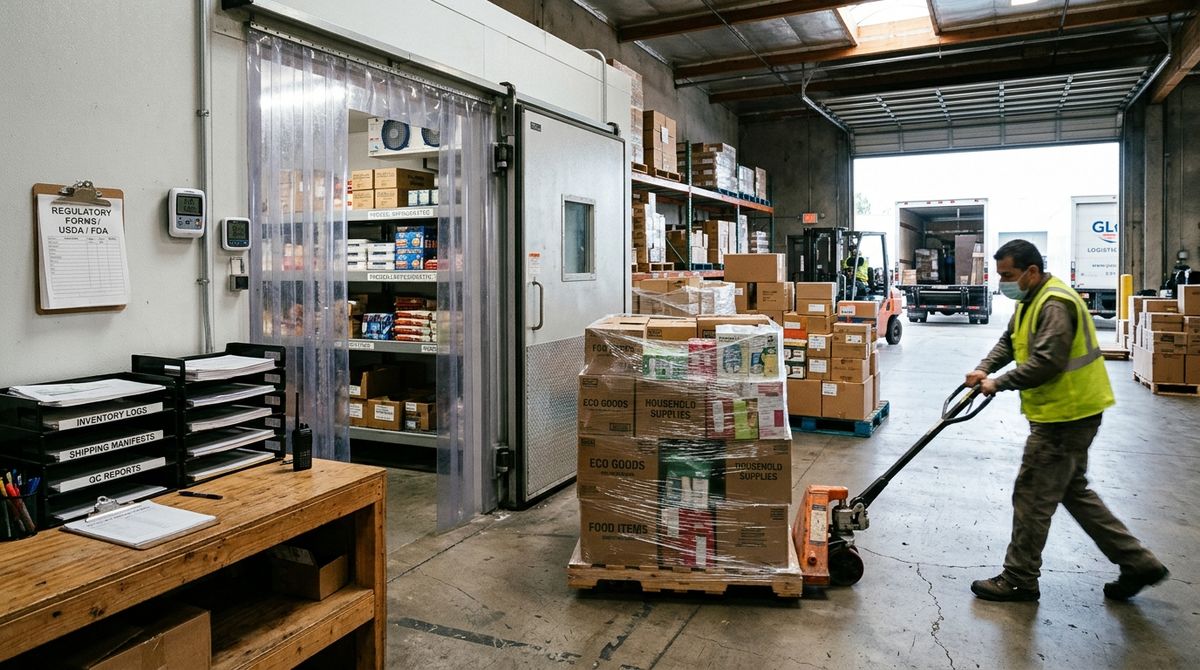
Below the headline margin sits a second layer of costs that are frequently buried in service agreement schedules rather than the main commercial terms. These include warehousing fees, pick-and-pack charges, cold chain surcharges for temperature-sensitive products, returns handling, and last-mile delivery to the full range of retail doors.
Across contract structures we have reviewed, these operational fees commonly add between 5% and 12% on top of the base distributor margin. For cold chain products, the surcharge alone can represent a significant portion of that range. Last-mile delivery to general trade is particularly cost-intensive in Malaysia, where provision shops and mini markets are geographically dispersed and low in order value per drop, meaning the cost per case delivered is structurally higher than modern trade.
Brand owners entering Malaysia for the first time often do not account for this, particularly those coming from markets where logistics is bundled invisibly into the margin. Understanding how a Malaysian distributor actually structures its operations before reviewing the service agreement is advisable, because the line items vary considerably between distributors.
Retailer activation and trade spend
The third cost driver is trade spend, which covers listing fees, promotional contributions, in-store visibility fees, and planogram compliance costs. Some of these are mandatory, driven by the retailer. Others are discretionary investments that the brand and distributor agree to jointly.
The distinction matters enormously for ROI measurement. A listing fee paid to secure a slot in a national pharmacy chain is a fixed access cost. A co-funded promotional mechanic, such as a price reduction or a gondola end display, is a variable investment that should generate measurable sellout uplift. Conflating the two makes it impossible to evaluate whether the trade spend is generating returns or simply subsidising retailer margins.
Distributors often present trade spend as a combined fund requirement, which obscures the breakdown. The due diligence step here, which we cover in more detail in the section on reading a commercial proposal, is to request a full itemisation of mandatory versus discretionary spend before agreeing to any promotional fund contribution.
Compliance, reporting, and data access
The fourth cost driver is the least visible and, in our observation, the most underestimated. Regulatory compliance in Malaysia requires documentation across multiple authorities. Product registration with the National Pharmaceutical Regulatory Agency (NPRA, formerly KKM) applies to health, personal care and medical products. Halal certification from JAKIM is a commercial necessity for reaching the majority of Malaysian consumers. Import permits, food safety documentation, and labelling compliance all carry administrative costs, whether borne directly by the brand or passed through by the distributor.
Beyond compliance, there is the cost of data, or more precisely, the cost of not having it. Where a distributor does not provide SKU-level sellout data at regular intervals, the brand is operating without the information needed to manage inventory, evaluate promotional performance, or plan replenishment accurately. Overstocking and stockouts both carry real financial consequences. Poor promotional planning, driven by the absence of sellout visibility, compounds those costs further.
Data access is a commercial term, not a courtesy. It should be specified in the agreement.
How to read a distributor’s commercial proposal
A commercial proposal from a Malaysian distributor typically leads with the gross margin split and minimum order quantities. Both matter, but neither tells the full story without the supporting detail. Before completing distributor due diligence, there are six line items that warrant close scrutiny.
Gross margin split should be read alongside the channel mix the distributor intends to cover. A lower margin with strong modern trade coverage may deliver better net revenue than a higher margin applied only to general trade.
Minimum order quantities define the inventory risk the brand carries. High MOQs with slow sellout velocity create cash flow strain quickly. Credit terms determine how long the brand is effectively financing the distributor’s stock position. Promotional fund requirements, if mandatory, should be treated as a fixed cost of doing business and factored into the margin model accordingly.
Exit clauses deserve particular attention. Some distributor agreements include product ownership provisions or exclusivity terms that make switching costly. The recommendation is to treat the exit clause with the same scrutiny as the entry terms, because the cost of a poorly structured exit can exceed the cost of a year’s operational fees.
When the cost is justified, and when it is not
Where distributor cost delivers clear ROI
The total cost of distribution is well spent under a specific set of conditions. The clearest case is speed to market. Building direct relationships with retail buyers across modern trade, general trade, pharmacies, and baby stores in Malaysia independently would take 18 to 24 months for most international brands. A distributor with established retailer access compresses that timeline to weeks, and the time-to-value gain justifies the margin cost.
Regulatory navigation is a second legitimate value driver. For brands new to Malaysia, the compliance requirements across NPRA, JAKIM, and Royal Malaysian Customs are real barriers that an experienced distributor removes. The same applies to local warehousing: a distributor with bonded storage and an owned fleet removes the need for a physical entity or third-party logistics arrangement, which carries its own setup cost and management overhead.
The decision between using a distributor and building a direct sales operation often comes down to this time-to-value calculation. For most international brands entering Malaysia, the distributor route wins on that metric clearly.
Where the cost outpaces the return
There are equally clear conditions under which a distribution arrangement is destroying value. Low sellout velocity combined with high minimum purchase commitments is the most common pattern. The brand replenishes stock on the distributor’s terms, the stock moves slowly through to retail, and working capital is locked in inventory that generates no sellout revenue.
No access to sellout data signals a structural problem. Without SKU-level performance visibility, the brand cannot identify which channels are working, which SKUs are underperforming, or whether promotional investments are generating returns. The result is compounding cost: promotional spend that cannot be evaluated, inventory decisions made on incomplete information, and merchandising effort that cannot be verified.
Distributor conflict of interest is a less discussed but significant value drain. Where a distributor carries directly competing SKUs at a higher margin, the commercial incentive to prioritise those products at shelf is real. The brand experiences poor merchandising compliance, low share of shelf, and weak sales velocity, while the distributor’s overall portfolio performance remains acceptable to them.
Five questions to ask before signing any distribution agreement
Before committing to any distribution arrangement in Malaysia, whether entering the market for the first time or reviewing an existing network, the following five questions should have clear, documented answers.
What is the full landed cost to shelf? This means the distributor margin, all operational fees, mandatory trade spend, compliance costs, and retailer margin, expressed as a percentage of RRP. If the distributor cannot or will not produce this figure, that is itself a signal.
What sellout data is provided, at what frequency, and in what format? Weekly SKU-level sellout data by channel should be the standard. Monthly aggregated data is insufficient for inventory management or promotional evaluation.
What are the exit conditions? Understand the notice period, any minimum term, exclusivity provisions, and what happens to stock in the distributor’s warehouse on termination.
Who owns the retailer relationship? If the retailer knows the distributor but not the brand, the brand’s negotiating position in any future channel expansion or distributor switch is weak. Brands that find the right distribution partner from the outset avoid this problem by negotiating retailer transparency into the agreement from day one.
How is trade spend accounted for? Promotional fund contributions should be itemised, with mandatory and discretionary spend separated, and actual deployment of those funds reportable against agreed activities.
The brands that extract the most value from distribution partnerships treat the commercial proposal as a financial model. Every fee, every commitment, and every data provision should be quantified and stress-tested against realistic sellout scenarios before the agreement is signed. If those conversations are welcomed rather than resisted, that is a strong indicator of a distributor worth working with.
To discuss how Lim Soon Huat Group structures its commercial partnerships and what full cost transparency looks like in practice, reach out to our partnerships team at /partner-with-us.