
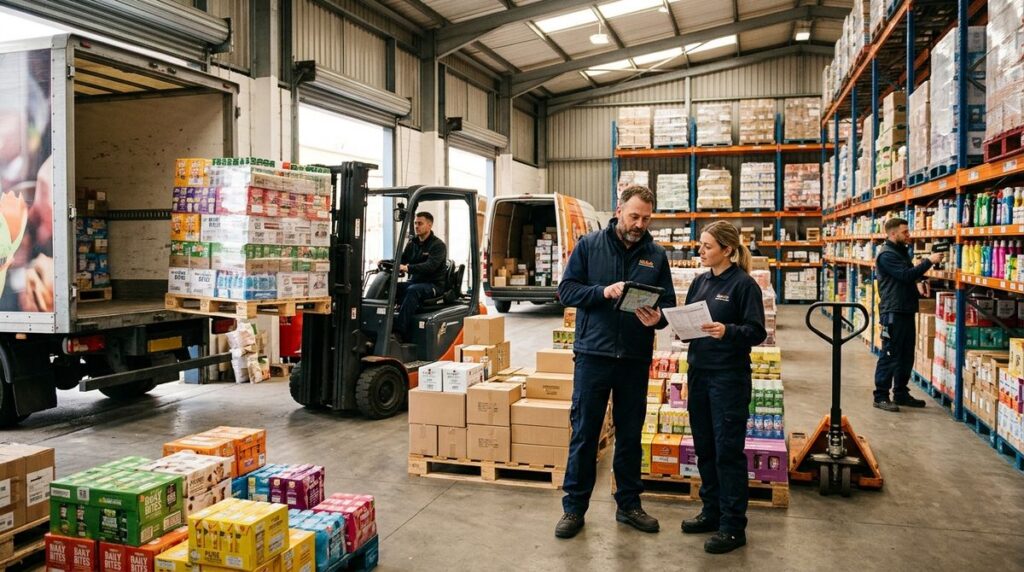
A distributor in FMCG is the commercial intermediary that buys stock from a brand principal, holds it in its own warehouses, and moves it through to retailers and end-channels under a formal trade relationship. That definition sounds simple. In practice, what a distributor does spans market coverage, inventory management, field sales, trade marketing, and market intelligence reporting, all of which determine whether a brand ends up on the shelf or in a planning deck that never materialises.
What a distributor does in FMCG
In Malaysia and across Southeast Asia, the distributor’s role carries extra weight because of how fragmented the retail landscape is. Modern trade (hypermarkets, supermarkets, chain pharmacies) accounts for a share of FMCG sales, but general trade, provision shops, mini markets, Chinese medical halls, independent pharmacies, baby stores, still drives significant volume, particularly outside the Klang Valley. No manufacturer can cost-effectively reach thousands of small-format accounts directly. The distributor exists precisely to solve that problem.
This is different from a logistics provider, which moves goods on behalf of someone else without taking ownership of stock or responsibility for sales outcomes. It is also different from a wholesaler, who buys and sells reactively without the contractual obligations, field force, or reporting cadence that define a true distribution partnership. The distinction matters in practice because brand owners who appoint logistics companies or passive wholesalers often find their products warehoused but not sold.
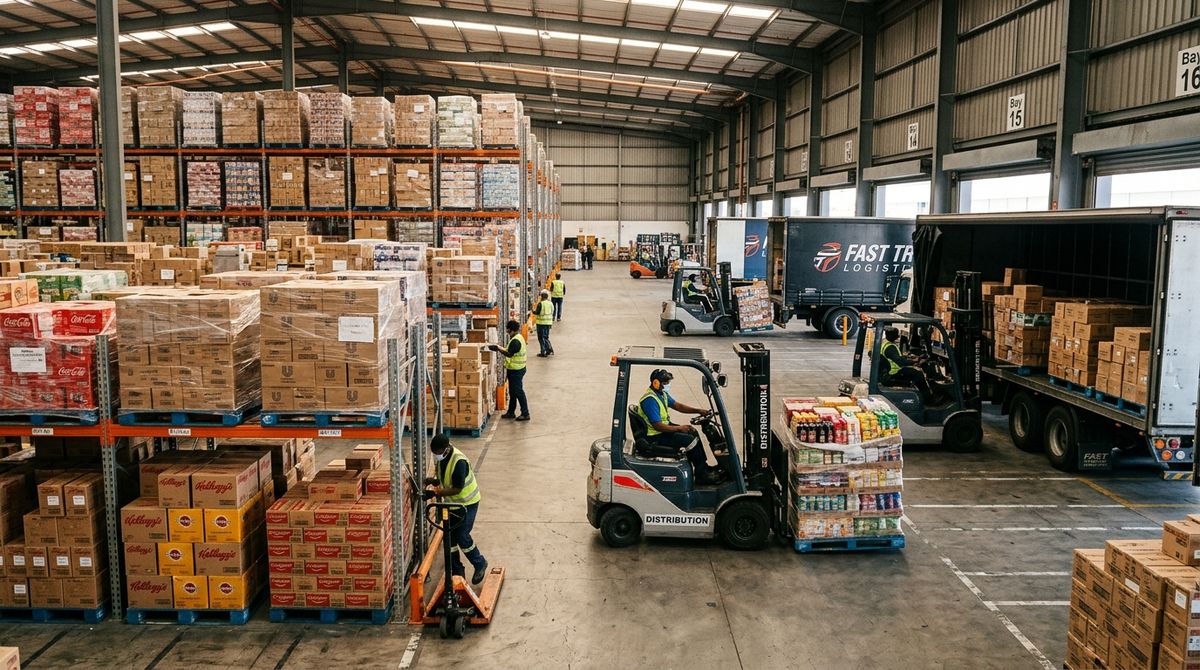
The five core functions of an FMCG distributor
Asia’s FMCG market grew 2.8% year-on-year in Q1 2025, led by food, beverages, and home care. Malaysia posted 1.6% growth over the same period, with fewer shopping trips but higher spend per visit. That gap between regional growth and local performance is not a category problem, it is an execution problem. The distributor’s job is to translate category-level growth into actual shelf presence, account by account, channel by channel.
Market coverage and channel reach
A distributor maps retailer accounts across channels, provision shops (small neighbourhood grocers, often family-run), mini markets, pharmacies, baby stores, and modern trade, and assigns field sales staff to service those accounts on a fixed call cycle. Route planning determines which accounts are visited, how often, and in what order. Call frequency matters because FMCG products are fast-moving: out-of-stocks translate directly into lost sales, and a provision shop that runs out of a product will simply buy a competitor’s.
In Malaysia, where growth is uneven by city tier and channel, coverage depth is what separates a distributor that captures growth from one that misses it. Reaching 500 accounts in Kuala Lumpur is not the same as reaching 5,000 accounts across Central Region and Pahang. Brand owners entering Malaysia for the first time should ask not just how many doors a distributor covers, but which channels, which states, and at what call frequency.
Inventory management and demand planning
Holding the right stock at the right level is a discipline, not a default. Distributors manage warehouse operations, inbound shipments from principals, and stock allocation across accounts. The risk of doing this poorly is visible in markets like Indonesia, where FMCG value grew 5.5% even as volumes declined, meaning revenue figures masked real demand softness. A distributor relying solely on sell-in figures will over-order and sit on ageing stock.
The correct approach is to track sell-in, sell-out, basket size, and shopping frequency as separate indicators. Each tells a different part of the story. Sell-in shows what left the warehouse; sell-out shows what actually moved off the shelf; basket data reveals whether shoppers are trading up or down. At Lim Soon Huat Group, our four distribution centres across Kepong, Sungai Buloh, and Kuantan (totalling more than 105,000 sq ft) are managed to these indicators, not just to revenue.
Sales execution and merchandising
This is where a distributor converts a listing into sales velocity. Field sales staff take orders, negotiate shelf placement with retail buyers, ensure planogram compliance, and maintain in-store visibility, POSM placement, secondary displays, and correct pricing. The difference between an active field team and a passive order fulfilment operation is measurable in offtake rates within weeks of a launch.
Distributors who operate passively, waiting for retailers to call in orders, cannot support a brand launch, manage a new product introduction, or respond to competitive activity in-store. Brand owners evaluating distribution partners should ask for field team headcount, call coverage reports, and evidence of merchandising activity, not just a list of retail accounts.
Trade marketing and promotions management
Festive periods in Malaysia (Ramadan, Chinese New Year, Hari Raya, Deepavali, year-end) drive significant demand spikes, and a distributor that cannot execute promotions at scale during these windows costs the brand real revenue. This includes coordinating trade deals with retail buyers, managing promotional stock allocation, and ensuring POSM goes up on time.
Thailand’s experience is a useful reference point: government subsidies pulled consumer demand forward into late 2024, which suppressed Q1 2025 figures and made growth look weaker than the underlying trend. Distributors that understood the promotional calendar avoided over-reading the dip. Promo-sensitive execution is a core competency, not an optional service layer.
Market intelligence and principal reporting
A capable distributor feeds information back to brand owners: sell-out data by account, pricing compliance, competitor activity, retailer feedback, and emerging demand signals. This data feedback loop is what separates a strategic distribution partner from a commodity logistics player.
Brand owners, especially those managing Malaysia from regional headquarters in Singapore, Bangkok, or Seoul, depend on this reporting to make decisions on pricing, pack architecture, and promotional investment. A distributor that cannot produce structured sell-out reports is not in a position to support brand growth; it is simply moving boxes.
How distributors fit into the FMCG supply chain
The chain runs: principal → distributor → retailer → shopper. The distributor owns the stock between principal and retailer. That ownership relationship is what distinguishes a distributor from a third-party logistics provider (3PL), which moves goods on a fee basis without taking title. It also distinguishes a distributor from a sub-distributor, who operates downstream of the main distributor and typically covers a specific geography or channel on a resale basis.
In Malaysia, importers handle customs clearance and regulatory registration (with KKM/NPRA for health products, JAKIM for halal certification, brand owners should verify requirements directly with the relevant authority). The distributor typically takes over once goods are cleared and bonded, managing all downstream activity from that point.
What separates a capable distributor from a weak one
Based on observed practice in the Malaysian FMCG market, four factors differentiate strong distributors from weak ones: retailer account depth (not just the headline door count), inventory discipline under shifting demand, field team activity rates, and the quality of data returned to the principal.
Vietnam posted its strongest Q1 in five years in 2025, driven by essentials pricing and Tet holiday demand. Malaysia grew at 1.6%. The gap reflects market conditions, but it also reflects execution. Brands with distributors who maintain deep account relationships, keep stock aligned to sell-out trends, and run active field teams perform better relative to market conditions than those with passive distribution arrangements.
What brand owners should require from a distributor
When evaluating or selecting a distributor in Malaysia, the non-negotiables are these: verified retailer coverage with account lists by channel and state; an active field force with documented call frequency; appropriate storage capability (ambient, chilled, or controlled, depending on the product); trade marketing capacity to execute festive and promotional programmes; and a structured reporting cadence that covers sell-out, pricing, and competitor activity.
Each of these is a business-outcome driver. Verified coverage determines time-to-shelf. Active field teams drive revenue retention after launch. Trade marketing capacity determines promotional ROI. Reporting quality determines how quickly a brand owner can respond to market shifts. For international brands planning their Malaysia market entry, these requirements should form the basis of distributor selection, not be treated as preferences to negotiate away.
At Lim Soon Huat Group, our two companies, LSH for emerging and challenger brands, ALSH for multinational principals, are structured around exactly these requirements, with 80+ sales representatives, 25 merchandisers, and direct coverage across Central Region and Pahang. If the brief above describes what a brand needs from a Malaysian distribution partner, we are open to a conversation at /partner-with-us.