

Choosing between a distributor and a principal agent in Malaysia decides who funds the stock, who chases late payment and who answers when a launch underperforms. For most brands entering Malaysia for the first time, the distributor model is the right default: it moves stock and credit risk to the local party, and the price and brand control a brand owner gives up can largely be written back in by contract. The agent model suits brands with working capital, a local entity and a strong need to control price and customer relationships.
Key takeaways
- A distributor buys, owns and resells. A principal agent secures orders for commission while the principal remains the seller.
- Title and the name on the retailer’s contract drive most of the risk split.
- Distributors carry stock and retailer credit risk. Under agency, the principal carries both.
- Agency gives more control over price and brand, but exposes the principal to authority-based liability.
- Labels such as “sole agent” do not decide the legal position. Commercial mechanics do.
- Drafting precision decides who absorbs the loss when the relationship ends.
The two models at a glance
The choice between the two models is a decision about balance sheets. One model puts local inventory and retailer credit on a Malaysian company’s books. The other keeps them on the brand owner’s books in exchange for tighter control. Everything else in this comparison follows from that trade.
In Malaysian FMCG, a “principal” is the brand owner (or its regional entity) whose products are being sold. A “principal agent” is the representative who sells on the principal’s behalf. Retailers here range from provision shops (small, family-run neighbourhood grocers) and mini markets to pharmacies, baby stores and Chinese medical halls. Together these make up general trade, as distinct from modern trade (hypermarkets and supermarket chains). Our guide to how the two trade channels differ covers that split in more detail.
Distributor: buys, owns and resells
A distributor trades on its own account. It buys stock from the principal, takes title, stores it, and resells to retailers at prices and terms it sets, earning its margin from the spread. If a pallet expires in the warehouse or a provision shop fails to pay, the loss sits with the distributor. The principal has sold its goods and been paid.
Principal agent: sells on the principal’s behalf
An agent never owns the goods. It secures orders, often runs merchandising and key account management, and earns a commission. The principal remains the seller: it holds the stock, issues the invoice, and carries the exposure if the customer does not pay. Our overview of how principal agency works for FMCG brands goes deeper on the operating model.
Side-by-side summary table
| Dimension | Distributor | Principal Agent |
|---|---|---|
| Title to goods | Passes to distributor on purchase | Stays with principal until sale to retailer |
| Customer contract | Distributor and retailer | Principal and retailer, via the agent |
| Stock risk | Distributor | Principal |
| Credit risk | Distributor | Principal (unless del credere) |
| How paid | Margin on resale | Commission on sales |
| Liability to buyers | Distributor for its own sales; principal as brand owner for product | Principal for agent’s authorised acts and the product |
| Price control | Limited by competition law | Strong, within genuine agency |
Title, ownership and who contracts with the customer
Two questions carry most of the risk split. Where does legal title pass, and whose name is on the sales contract with each provision shop, mini market, pharmacy or baby store? Get those two answers and the allocation of stock risk, credit risk and liability largely follows.
Distributor chain: two separate contracts
The principal sells to the distributor. The distributor then sells to the retailer. These are two independent sales, and the principal has no contract with the retailer. The retailer cannot sue the principal for a late delivery, and the principal cannot sue the retailer for an unpaid invoice. That separation is the distributor model’s greatest strength for a foreign brand with no local entity, and its greatest weakness for a brand that wants to know who is buying its products.
Customer data follows the same line. The distributor holds the retailer master list, order history and pricing. Unless the agreement says otherwise, the brand owner sees only what the distributor chooses to report.
Agent chain: one contract through the agent
Under agency, the agent concludes or introduces a sale in which the principal is the seller. One contract exists, between principal and retailer, with the agent acting as the conduit. The principal owns the customer relationship by default, including the data.
The price of that ownership is exposure. The principal needs a local invoicing entity or a workable cross-border arrangement, a collections process, and the ability to supply goods against orders the agent brings in. Brands that skip this question at the start usually find the answer later, at their own cost.

Inventory and credit risk
This is where the two models separate most sharply in cash terms. In the Malaysian arrangements we see, the party holding stock and extending credit to retailers is also the party that needs the larger working-capital line. Brands often underestimate how large that line is.
Stock and expiry exposure
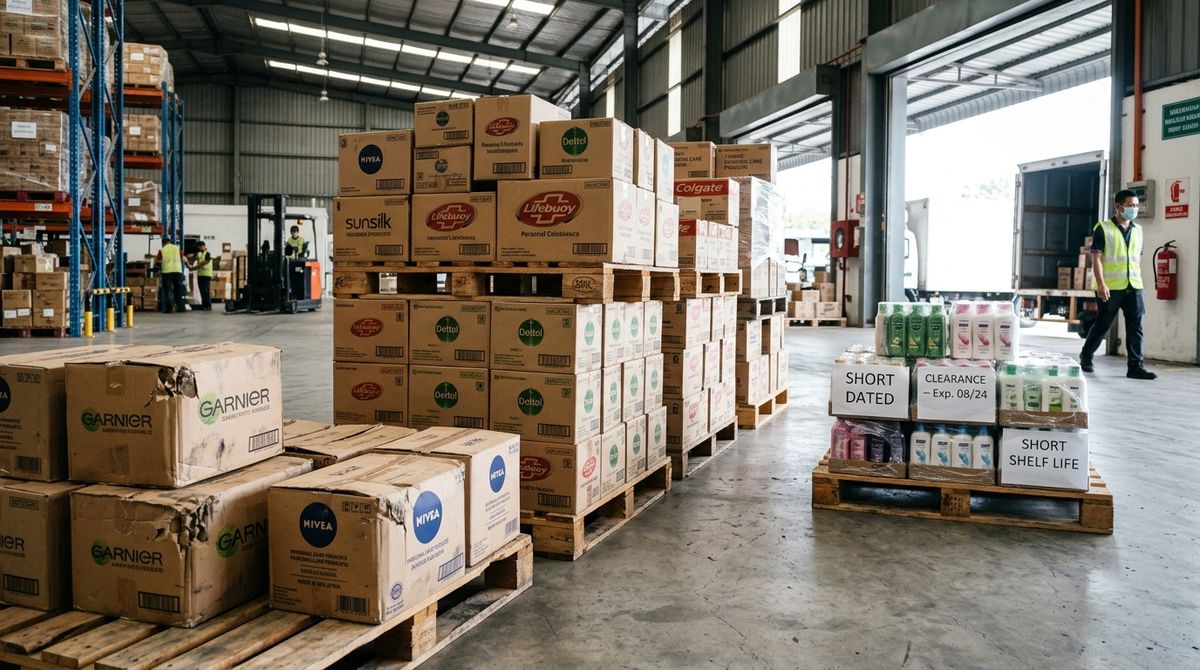
A distributor carries stock on its own balance sheet. It absorbs damage in transit, expiry on short-dated food and personal care lines, and slow-moving SKUs that never find a shelf. This is why a good distributor is selective about which SKUs it takes and pushes back on long, untested ranges.
Under agency, the principal keeps title to stock sitting in Malaysian warehouses. Every carton that ages out is the principal’s write-off. For a brand entering Malaysia for the first time, this means funding inventory months ahead of revenue, usually before it knows which SKUs will move. Our practical guide to entering the FMCG market sets out how that cash cycle plays out.
Retailer credit and bad debt
General trade runs on credit. Retailers commonly expect payment terms after delivery, and many provision shops and mini markets are micro businesses with thin cash buffers. According to SME Corp data for 2025, MSMEs account for 96.2% of Malaysian establishments, and 77.4% of those are microenterprises. That is the customer base a distributor or agent is extending credit to.
Under the distributor model, non-payment is the distributor’s loss, and a distributor with a mature credit-control process protects both parties. Under agency, the principal absorbs bad debt. The middle path is a del credere arrangement, where the agent guarantees customers’ payment in return for an additional commission. It shifts part of the credit risk back to the agent, and it costs the principal more commission. We recommend it whenever a principal wants agency control but cannot afford open-ended retailer exposure.
Pricing, margins and commission structures
How each party is paid determines what each model costs the principal in total. Frame the comparison in three measures: net revenue per unit, working capital tied up, and time to first revenue. The distributor model usually wins on the last two. The agent model can win on the first.
Distributor margin and trade terms
A distributor earns its margin on the spread between purchase price and resale price. That margin has to cover warehousing, delivery, a sales force, merchandising, credit losses and its own profit. Principals in FMCG typically also contribute to promotional funding, listing fees and rebates, negotiated up front and written into the agreement. Which side funds which cost is a commercial question, and it should be answered in the contract rather than left to each promotion cycle.
Agent commission and cost pass-through
An agent’s commission is a percentage of sales, with the trigger defined in the contract: on order, on delivery or on cash received. The trigger matters. Commission on order rewards volume regardless of whether the retailer pays. Commission on cash received aligns the agent with collection. We favour the second whenever the agent has any influence over credit.
Commission is only one line. The principal also pays for logistics, financing, collections and field support, which a distributor would otherwise fold into its margin. Commission rates that look low next to a distributor margin are not like-for-like for that reason.
Total landed cost comparison
The following is an illustrative example only, not a market benchmark. Take 1,000 units of a personal care product, with the retailer paying RM10.00 per unit (RM10,000, about USD 2,100).
| Line (per 1,000 units) | Distributor model | Agent model |
|---|---|---|
| Revenue to principal | RM8,000 (sold at RM8.00 to distributor) | RM10,000 (invoiced to retailer) |
| Commission | None | RM800 (8%) |
| Warehousing and delivery | Borne by distributor | RM600 |
| Financing (60 days at 8% a year) | Borne by distributor | about RM130 |
| Bad-debt provision (1%) | Borne by distributor | RM100 |
| Promotional contribution | RM300 | RM300 |
| Net to principal | about RM7,700 | about RM8,070 |
The agent model nets about RM370 more per 1,000 units on paper. But it requires the principal to fund stock, extend credit and run logistics. For a brand without those capabilities, the distributor model’s lower net is the cost of not building them.
Liability to buyers and third parties
A distributor is not the principal’s representative. It sells its own purchases and answers for its own contracts. An agent is different: under the agency provisions of the Contracts Act 1950 (Part X), a principal can be bound by what its agent does. We flag the statutory detail for confirmation with Malaysian counsel before any agreement is signed, but the practical position is clear.
Actual and apparent authority
An agent’s authority can be express (written into the appointment) or implied from conduct and the nature of the role. Problems start when the written limits are narrower than what retailers believe the agent can do. If an agent has been quoting discounts and accepting returns for two years, a retailer can reasonably assume that authority exists, even if the agreement capped it.
The fix is practical. Define authority limits in the agreement, then tell retailers what the agent can and cannot agree to, for example through the order form or terms of trade.
Ratification and undisclosed principals
A principal can also be held to an unauthorised deal by ratifying it, whether by saying so or by accepting its benefits. Shipping goods against an order the agent had no authority to take, and invoicing for it, risks being treated as ratification. A principal who wants to reject an out-of-bounds deal has to say so promptly and act consistently.
Undisclosed principals raise a separate issue. If an agent deals in its own name without revealing the brand owner, the retailer may have rights against both. For FMCG brands, the brand is on the shelf, so the principal is rarely truly undisclosed.
Product and warranty claims
Product responsibility runs through the brand owner under either model. Defects, labelling errors and recalls trace back to the brand owner and the importer of record, whichever chain the goods travelled through. A distributor’s separate contract does not shield a principal from liability for what is in the pack. What differs is contractual recourse: a distribution agreement should require the distributor to support recalls, preserve batch records and stop sale on instruction. An agency agreement should do the same for goods held in the principal’s own stock.
Control over pricing, brand and territory
Control is what the agent model buys. Under it, the principal sets price, chooses customers, dictates brand presentation and keeps customer data. A distributor, being independent, controls its own resale price, though competition law limits how far a principal can push back.
Resale price and territorial limits
A genuine agent sells the principal’s goods at the principal’s price. A distributor sets its own price, and a principal that dictates it creates exposure. The MyCC takes a strong stance against minimum resale price maintenance, and even maximum or recommended prices can be anti-competitive if they become a focal point for collusion downstream. A principal can publish a recommended retail price, but should not enforce it through the distributor’s margin or supply.
Territory restrictions raise a related point. The MyCC’s guidelines identify exclusive distribution covering a geographic territory, and exclusive customer allocation, as vertical restraints within scrutiny.
Exclusivity under the competition act 2010
Section 4(1) of the Competition Act 2010 prohibits a vertical agreement only where its object or effect is to significantly prevent, restrict or distort competition. Non-price vertical agreements are generally not seen as having a significant effect where neither party’s market share exceeds 25%. For most emerging and challenger brands in Malaysia, that safe harbour is the practical starting point. MyCC enforcement has so far concentrated on horizontal cartels rather than vertical deals.
Procedure matters too. Before finding an infringement, the MyCC must give written notice with reasons and the chance to make representations, and a hearing requires at least 14 days’ written notice. Penalties are capped at 10% of worldwide turnover for the infringement period. The Act does not apply to communications and multimedia, energy, upstream petroleum or aviation services, which sit with their own regulators. FMCG is outside those exclusions.
How a genuine agent’s status changes the competition analysis is a point we leave for external legal confirmation, since the available Malaysian guidance on it is thin.

Label vs substance: “sole agent”, “exclusive agent” and real distributors
Malaysian trade habitually calls a buy-and-resell distributor a “sole agent” or “exclusive agent”. The label is commercial shorthand for exclusivity. It does not make the relationship one of agency, and it does not settle the risk split.
The principle that supports this is how Malaysian courts read contracts. In Catajaya Sdn Bhd v Shoppoint Sdn Bhd [2020] MLJU 2333, the Federal Court said contractual headings carry no substantive interpretive value and serve only as a brief guide and for reference. The case concerned a share sale, not distribution or agency, so we cite it for one principle only: courts read the agreement as a whole and look to what the clauses do, not what the headings say.
Applied here, a contract titled “Sole Agency Agreement” under which the “agent” buys at an invoiced price, resells at its own price and bears non-payment is a distribution agreement in substance, and risk lands accordingly. The reverse also holds. The practical danger is a principal who thinks it has a distributor, with stock and credit risk off its books, when the mechanics point the other way.
Three tests that reveal the true relationship
Ask three questions of any arrangement, whatever it is called:
- Who takes title? If the counterparty buys and owns the goods, it is a distributor.
- Who sets the resale price? If the counterparty decides what the retailer pays, it is trading on its own account.
- Who carries the credit risk? If the counterparty must pay the principal whether or not the retailer pays it, it is a distributor.
Three yeses mean distributor, whatever the cover page says. For a sharper view of how these arrangements can go wrong in practice, see our list of warning signs of a distributor that is costing sales.
Termination, notice and compensation
Exit terms decide who absorbs the cost when the relationship fails. Malaysia has no standalone statute giving a terminated agent or distributor an EU-style or UAE-style goodwill or indemnity payment, to the best of our knowledge, and we recommend confirming this with Malaysian counsel. The outcome rests on contract wording and the Contracts Act’s general remedies. A weak termination clause is therefore the largest single source of avoidable loss.
What catajaya teaches about termination drafting
The Federal Court in Catajaya reversed the High Court and the Court of Appeal. A termination clause cross-referred to another clause, so both had to be read together, and the 30-day remedy notice in the referenced clause applied before termination could take effect. That held even though a separate clause made time of the essence, which the lower courts had relied on to reject any remedy period. The case ran through three levels of court with opposite outcomes at the top and bottom.
Again, the dispute concerned a share sale, not a distribution arrangement. Its lesson transfers regardless: precise wording and explicit cross-references decide who bears loss. A principal that believes it can terminate for a distributor’s missed target immediately may find a remedy period elsewhere in the agreement says otherwise. Our guide to the distribution agreement clauses that matter covers the drafting points in more detail.
Stock buy-back, sell-off and post-term rules
Exit also raises practical questions. Under the distributor model, the distributor holds unsold stock. The agreement should say whether the principal buys it back, whether the distributor has a sell-off period, and at what price. Without those terms, expiring stock becomes a dispute.
Under agency, stock belongs to the principal, so the question reduces to recovering it and moving it to a new representative. Both models also need rules for customer lists, order history and sell-out data on exit. A principal that owns the customer relationship by contract still needs the data handed over in a usable form.
Tax, customs and regulatory exposure
An overseas principal using an agent that habitually concludes contracts in Malaysia risks creating a permanent establishment, which would bring Malaysian tax on profits attributable to it. A distributor trading on its own account carries lower exposure on that front, because the principal simply sells goods to a Malaysian buyer. We flag every point in this section for verification with a Malaysian tax adviser and LHDN.
Three other items are worth raising early. Sales and service tax treatment can differ depending on who imports, who sells and at what stage. Withholding tax can apply to certain payments to non-residents, so how a commission or fee is characterised matters. And customs duties and import responsibilities rest with the importer of record, so confirm the position with Royal Malaysian Customs before shipment.
Importer of record and product registration
Whoever acts as importer of record holds the import responsibilities and compliance duties. For food, personal care, baby care and health products, that includes product notifications, labelling and, where claimed, halal compliance. Cosmetics and health products fall under KKM and NPRA requirements, and halal certification sits with JAKIM, so check each with the relevant authority. Our guide to halal certification for imported brands explains the process.
A distributor commonly acts as importer of record, using its own licences and registrations. Under agency, the principal usually needs its own importing arrangement or must appoint a licensed importer, which adds setup time.
Local sales effort, coverage and data quality
The model decides who builds route-to-market capability, and capability is what drives revenue and retention. Coverage across provision shops, mini markets and pharmacies depends on sales reps, merchandisers, delivery trucks and call frequency. A distributor already has that machinery and spreads its cost across many brands. An agent can bring a dedicated team, but the principal pays for it through commission, a retainer or both.
Data quality differs too. Under agency, the principal sees orders, invoices and retailer details natively. Under distribution, sell-out reporting depends on what the agreement obliges the distributor to share, so reporting duties belong in the contract.
Retailer structure shapes the work. With micro firms accounting for 77.4% of Malaysian MSMEs, many outlets order in small quantities, buy on credit and cannot hold deep stock. Reaching them calls for frequent visits and flexible delivery, which is expensive to build from scratch. As a distributor with dedicated sales and merchandising teams for principals, we see this cost first-hand: coverage is the hard part, not signing the agreement.
Contract checklist: what to write differently
Drafting precision decides risk allocation. The same commercial intent, written loosely, moves loss to the wrong party. The checklist below separates the clauses by model.
Agency agreement clauses
- Limits of authority, including maximum discount, credit limit and returns acceptance
- Commission rate and trigger (order, delivery or cash received)
- Del credere terms, if the agent guarantees payment
- Reporting duties: call reports, sell-out data and stock counts
- Minimum sales targets and consequences of missing them
- Collection responsibility and who pursues overdue accounts
- Notice to retailers of the agent’s authority limits
Distribution agreement clauses
- Payment terms and consequence of late payment
- Minimum stock holding levels and re-order obligations
- Minimum purchase commitments tied to the term
- Resale restrictions drafted to pass competition review, avoiding minimum resale prices
- Territory and customer scope, checked against the 25% safe harbour
- Data and reporting duties on sell-out and retailer lists
- Termination remedy periods with explicit cross-references, plus buy-back and sell-off rules
- Recall support and batch-record obligations
Decision method: five questions that pick the model
Based on our work with brands entering and expanding in Malaysia, five questions decide the model. Answer each and count where the answers land.
- Pricing control. If the brand must fix shelf price, choose agent. If it can accept recommended pricing only, choose distributor.
- Brand and customer ownership. If the brand needs direct ownership of retailer relationships and data, choose agent. If a reporting obligation is enough, choose distributor.
- Stock and credit appetite. If the brand can hold Malaysian stock and fund retailer credit, agent is open. If not, choose distributor.
- Cash flow. If the brand needs revenue within weeks of shipping, choose distributor. Agency delays cash until retailers pay.
- Need for local sales effort. If the brand needs an existing field force and fleet, choose distributor. If it will build or fund its own, agent works.
Three or more answers pointing to one model settle the choice. A split result usually means a distributor with strong contractual controls.
Scenarios: which model fits which brand
First-time foreign FMCG entrant
A brand from Australia, Korea, China, Thailand or Europe, with no local entity and limited working capital, fails questions three, four and five for agency. Choose a distributor. It absorbs stock and credit, handles importing and delivers coverage on day one. Protect the brand through contract: reporting duties, minimum performance, recall support and a clean exit.
Challenger brand seeking wider reach
A brand with local presence, selling through a few channels, needs coverage rather than control. The usual answer is a distributor for the channels it cannot serve, perhaps alongside its own team for key accounts. Where the brand wants to keep modern trade accounts direct, agency for those accounts and distribution for the rest is a workable split, provided the agreements do not overlap. Our look at selling direct to Malaysian retailers sets out when going alone makes sense.
Established brand replacing a weak distributor
A principal leaving an underperforming distributor faces three problems: unsold stock, customer hand-over and a coverage gap during transition. Agree the stock buy-back or sell-off first, secure retailer and sell-out data in the exit terms, and line up the replacement before notice is served. Moving to agency at this point sounds attractive for control, but it puts the principal’s cash behind stock and receivables at the moment it can least afford the disruption.
Verdict: who carries the risk
The distributor carries stock and credit risk. The principal keeps price and brand control only by contract, and competition law limits how tight that contract can be. The agent model leaves nearly all commercial risk with the principal in exchange for control. Neither is free. One costs control, the other costs capital.
For brands entering Malaysia for the first time, the recommendation is a distributor, with a tightly drafted agreement. Choose agency only where the brand can fund stock and credit, wants direct ownership of retailer relationships, and has the local capability to run it. We run both a distributor and an agency-style sales operation, so we have a view from each side, and the first-time entrant default stays the same.
Before signing, run a risk-allocation review of the existing or proposed agreement: who takes title, who sets price, who carries credit, and what the exit clause says. Have Malaysian counsel confirm the legal and tax points, and check product-specific rules with KKM/NPRA, JAKIM and Royal Malaysian Customs. If it helps to compare the options against your own range, our partnerships team can talk it through at /partner-with-us.