

A halal certificate from the home market does not guarantee Malaysian shelf access. Halal certification Malaysia JAKIM approval for imported products turns on one question: does JAKIM recognise the body that issued the certificate? Every week lost on that question delays listings and first revenue.
Key takeaways
Verify certifier recognition before any packaging or marketing spend. Appoint an accountable Malaysian importer early. Build the ingredient dossier and document pack before submission, and treat labels as compliance documents. Confirm every requirement with JAKIM directly.
What imported brands need before starting
Four inputs start the process: the home-market halal certificate, full formulation and supplier data, manufacturing site details, and a named Malaysian importer or distributor. Missing any one stalls the file. Brands still deciding on a route to market should first read our practical guide to entering Malaysia’s FMCG market.
The stake is commercial. Well-prepared applications take about 3 to 4 months, and queries stretch that to 4 to 9 months. Starting late means missing the listing window.
Halal certification vs HACCP, GMP, ISO 22000 and MeSTI
These are separate requirements. HACCP, GMP, ISO 22000 and MeSTI (the Ministry of Health’s food safety programme for Malaysian SMEs) address food safety and quality. Halal addresses permissibility of inputs, processes and handling.
They share evidence, though. Sanitation logs, supplier records and batch traceability serve both. Our recommendation: build the halal dossier first, then align the other standards to it, because halal demands the most granular ingredient-level records.
Step 1: confirm the certifier is recognised by JAKIM
Market access depends on the issuing body’s recognition, not on holding a certificate. An imported product cannot be described as halal in Malaysia unless a recognised foreign body certified it. Run this check before spending on anything else.
Check the current JAKIM recognised body list
Find JAKIM’s list of recognised foreign halal certification bodies on the Halal Malaysia portal and match the certifier to the country of manufacture. Confirm that recognition covers the product category (slaughtering, ingredients or consumer goods).
Industry summaries cite 96 bodies across about 49 countries, with some sources reporting 94 across 48. The figure shifts with each amendment, so rely on JAKIM’s current notice, not a secondary summary.
Decide between the recognised-body route and a direct application
Overseas manufacturers have two routes: certification by a JAKIM-recognised foreign body, or direct recognition by JAKIM. The decision rule is simple. If the home certifier is on the list for the relevant category, use the recognised-body route. If not, switch to a listed certifier in that country or apply to JAKIM directly. Brands that print and ship first on an unlisted certificate learn the cost of the alternative.
Step 2: appoint the accountable malaysian importer or distributor
The importer carries compliance responsibility for products, documentation, labelling and the supply chain. This is where a distributor’s compliance capability sets the brand’s time to market. A distributor with no halal documentation process becomes the bottleneck.
Our guide on who carries the risk between a distributor and a principal agent explains how this responsibility shifts with the commercial structure.
Who deals with whom: JAKIM, state religious departments, HDC and veterinary services
JAKIM is the federal authority. State religious departments (JAIN or MAIN) handle state-level matters. The Halal Development Corporation (HDC) supports industry development. The Department of Veterinary Services joins the process for meat and poultry.
In practice, the brand deals with its home certifier. The certifier holds JAKIM recognition. The Malaysian importer deals with the Malaysian authorities. Confirm the exact contact point with JAKIM.
Define the halal assurance roles
Assign a dedicated halal-assurance team, on both the brand side and the importer side. It owns documentation, supplier audits, corrective actions, training and communication with the certifier. Name one accountable person per function. Unowned tasks are the first to lapse.
Step 3: map every ingredient and processing aid
Build a live ingredient dossier covering all inputs, not just the finished product. Every ingredient, carrier and processing aid needs a specification and a supplier halal status. Any formula change or supplier substitution triggers halal review before implementation, never after.
Flag halal-sensitive inputs
Mark the high-risk categories first: flavour carriers, emulsifiers, enzymes, gelatin, alcohol-based carriers and animal-derived inputs.
A packaged snack, beverage or confectionery looks low risk to a consumer. It still carries many of these inputs. A flavoured seaweed snack, for example, can include a flavour carrier, an emulsifier and a gelatin-coated seasoning, each with its own supplier and certificate trail.

Step 4: submit product and manufacturer documentation
The document pack holds ingredient specifications, production-flow charts, certificates of analysis where relevant, sanitation procedures, product labels and existing halal certificates. Supplier certificates must be valid and current. Collect them at least 3 months ahead, since this is usually the slowest document to compile.
Pre-audit readiness checklist
Auditors and verifiers expect to see:
- Supplier halal certificates, in date
- Purchase records
- Batch traceability
- Cleaning logs
- Training records
- Corrective-action files
Step 5: prove supply-chain integrity and prepare for audit
Certification verifies control of the whole chain, from raw materials to logistics, not only the finished product. Evidence of that control is what passes an audit.
Segregation, storage and transport controls
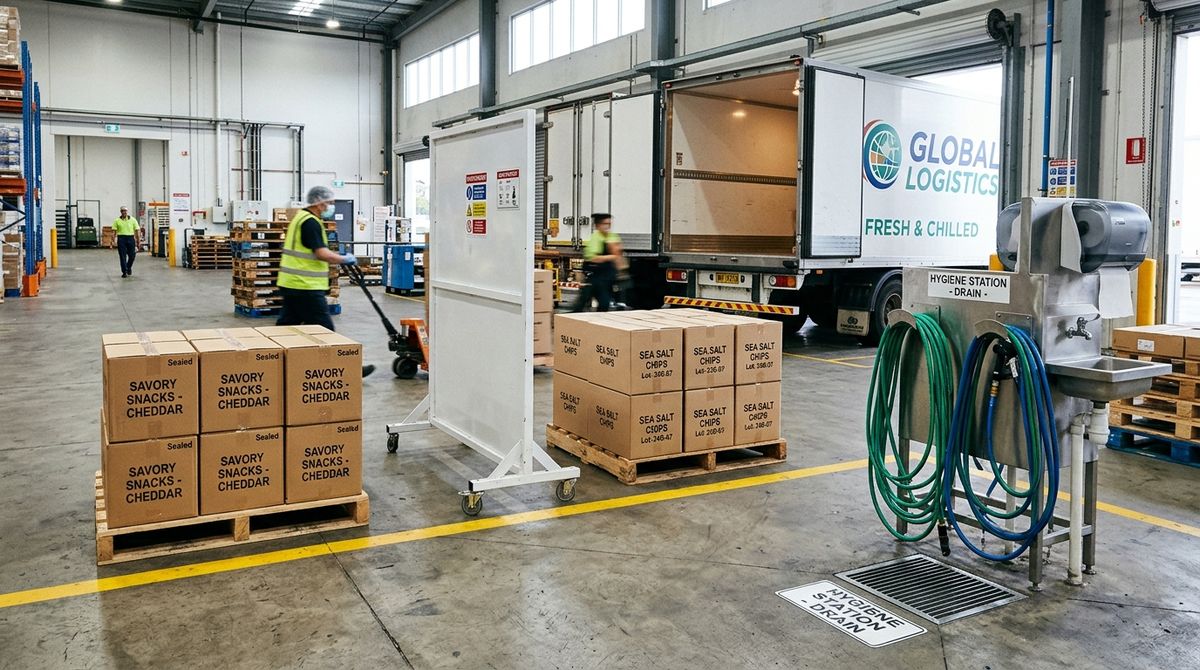
Separate halal and non-halal materials physically, and document cleaning and traceability. Bring contract manufacturers, co-packers, warehouses and transport providers into the halal-risk assessment. An outsourced step with no records is a gap in the chain.
Category-specific requirements
Imported meat and poultry face the strictest scrutiny. Foreign slaughterhouses and plants must be inspected and approved by JAKIM together with the Department of Veterinary Services. Dairy, pharmaceuticals, cosmetics and processed foods carry additional requirements, so confirm the applicable protocol with JAKIM before shipping.
Step 6: apply the halal logo and claims correctly
Treat labels as compliance documents and review them before printing. Check who may use the logo, how it appears on packaging, and every product name, ingredient declaration, claim and translation. Under the recognised-body route, the certifying body’s name must appear on the imported product.
Logo misuse and penalties
Misuse includes showing a logo from an unrecognised body or making unsupported halal claims. Under the 2011 Trade Descriptions Order, a corporation that deceives consumers into believing food is halal faces fines up to RM5 million (about USD 1.1 million), rising to RM10 million for repeat offences. A relabelling run or recall costs more than the review that would have prevented it. Verify current penalties with JAKIM and the Ministry of Domestic Trade and Cost of Living.
Step 7: maintain certification after approval
Certification is an ongoing management system. It covers renewal, change control, monitoring visits and continuous tracking of the recognised-body list. JAKIM officers can run unannounced visits, so records must stay audit-ready every day.
Distribution terms should reflect these duties. Our guide to the clauses that matter in a Malaysian distribution agreement covers where to assign them.
Change control triggers
Five events require halal review: a new supplier, a formula change, a new processing aid, a new co-packer or a site change. Add a standing quarterly review of the certifier’s recognition status. The risk is real: JAKIM withdrew recognition from three foreign bodies with effect from February 2025.
Worked example: a korean snack brand entering malaysia
This scenario is illustrative, not a client case. A Korean snack brand holds a home-market halal certificate and wants Malaysian retail listings.
It starts with the certifier check, and confirms its certifier is on JAKIM’s list for the product category. It then appoints a Malaysian importer that has a halal-assurance contact. Next it maps every ingredient, flagging the seasoning’s flavour carrier and emulsifier. The document pack follows, with specifications, flow charts, supplier certificates and labels. Label review comes last.
Applications like this stall in two places. The first is an unverified flavouring supplier certificate, expired or from an unrecognised body. The second is a label printed before review, which forces reprinting. Both are preventable with the sequence above.
Troubleshooting: common reasons for rejection or audit failure
Resolve these issues before submission, not after. A rejected file costs months, and an audit failure can cost the listing.
Ingredient or supplier documents without valid halal certificates
Expired or unrecognised supplier certificates are the most common cause of delay, and JAKIM’s system flags expired ones during review. The fix is either a supplier substitution or fresh certification of the existing supplier. Start whichever is faster.
Cross-contamination and missing records
Shared production lines and weak segregation raise contamination findings. Corrective actions are dedicated lines or documented cleaning validation, plus clear storage separation. Absent halal committee or assurance records are fixed by establishing the committee, minuting its decisions and training its members before the audit.
Certifier recognition changes
If the home certifier is suspended or removed from the list, pause shipments and contact the Malaysian importer immediately. Then move to a recognised body. Products already on the water need a decision from the importer and JAKIM, not a guess.
Expected outcome and next steps
The result is a product accepted for the Malaysian market, a distributor accountable for compliance and a maintenance routine in place. Brands then list with confidence in retail channels such as provision shops (small neighbourhood grocers), mini markets and pharmacies.
The recommendation is a fixed order. Verify certifier recognition first. Then choose a distributor that can demonstrate halal documentation capability before any contract is signed. We are a family-led FMCG distributor in Kuala Lumpur, serving retail channels only, and we can discuss how that fits a launch plan. Talk to our partnerships team at /partner-with-us.