
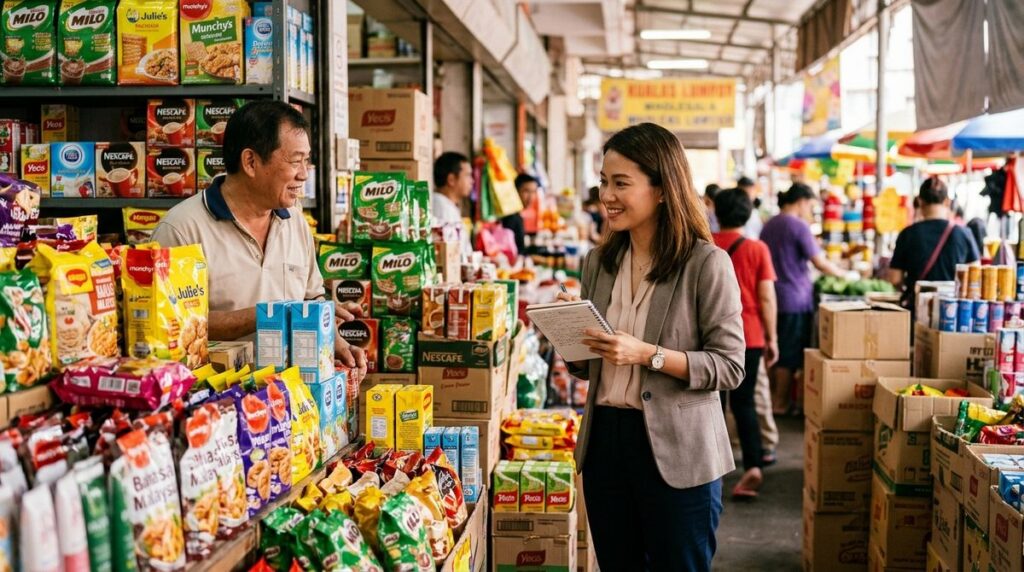
Malaysia FMCG market entry rewards brands that validate at category level and clear compliance before the first shipment. The market is forecast at roughly US$22 billion in 2026, rising to US$31 billion by 2032 (5.9% CAGR), while over 12,000 new SKUs launched in a single year compete for the same shelves. Entry means choosing a category, clearing halal and labelling rules, appointing a local importer or distributor, pricing from landed cost and piloting in controlled regions.
Key takeaways
- Validate by category, not by headline forecast.
- Clear halal, labelling and importer duties before shipping.
- Pilot through a local partner, priced from landed cost.
The malaysian FMCG opportunity and where demand sits
The forecasts are directional. Sources define categories differently (food only versus food and non-food, retail value versus manufacturer value), so two reports rarely match.
Treat the figures as proof of a healthy market, not proof that any one category will accept a newcomer. Entry succeeds on category-level validation: the shelf price ladder, private-label presence and the volume incumbents already move.
Consumer segments, price tiers and brand switching
Ethnicity, geography and income reshape the offer. Peninsular Malaysia and East Malaysia (Sabah and Sarawak) differ in distribution reach. Shoppers in the Klang Valley (Kuala Lumpur and surrounding Selangor) buy mainly through supermarkets and convenience chains, while rural households rely on small grocers. Each shift changes pack size, price point, flavour, language and channel. Snacks, beverages and personal care are the main entry categories for young households.
Loyalty is thin. A 2026 survey of 486 grocery decision-makers found 83.3% had switched brands in at least one category since January. It is one commercial survey, but the business implication holds: trial, availability and price execution decide early revenue.
Compliance before shipment: halal, labelling and importer responsibility
Compliance is a revenue gate and a trust asset. Food imports fall under the Food Act 1983 and Food Regulations 1985. Halal certification is mandatory for meat, poultry and animal-derived products and voluntary for general plant-based food. It still widens demand: in the same survey, halal was the top brand selection factor at 34.5%, ahead of price at 23.8%.
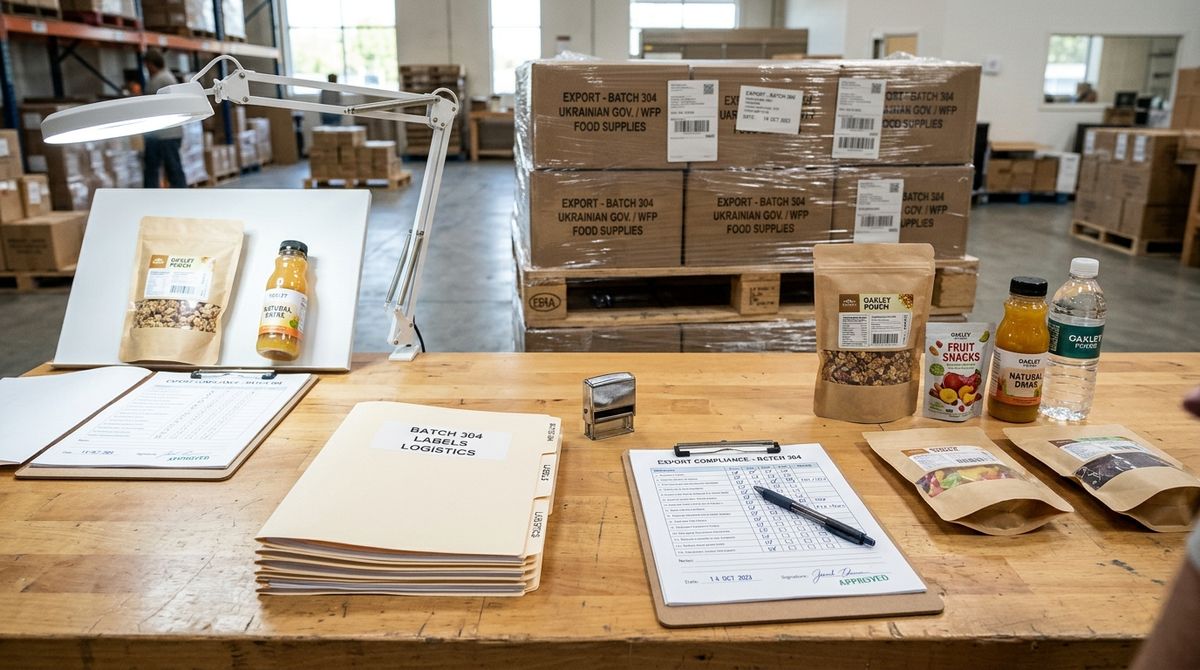
Certification comes from JAKIM (the Department of Islamic Development Malaysia) or a foreign body it recognises, and our guide to getting JAKIM halal certification covers the route. Cosmetics require notification to NPRA (National Pharmaceutical Regulatory Agency). Food labels must be in Bahasa Malaysia or English and carry importer details. The Malaysian importer holds local responsibility, so appoint one early.
Run seven checks before shipping:
- Classify every ingredient, additive and flavour.
- Confirm the halal certification route.
- Verify the certifier is accepted.
- Review labels and claims.
- Appoint the Malaysian importer.
- Secure permits and customs documents.
- Keep traceability records.
Requirements differ by category. Food and beverage follow the Food Regulations, with product-specific rules such as date marking for pasteurised soft drinks. Personal care goes through NPRA. Household products need category checks. Confirm each with KKM/NPRA, JAKIM or the Royal Malaysian Customs Department.
Four phases of market entry
The recommendation is four phases, in order: validate, choose channels and partner, localise and price, then pilot. Skipping one is the most common cause of stalled launches.
Phase 1, validate. Measure category size, the price ladder, private-label presence, willingness to pay and online review activity. Do this before deciding whether a distributor is needed.
Phase 4, pilot. Launch in limited regions and accounts. Judge success on weighted distribution, rate of sale, repeat purchase and contribution margin after trade spend.
Phase 2: channel mix and partner model
Modern trade (supermarkets, hypermarkets) delivers visibility. Convenience chains deliver impulse volume. Traditional trade (wholesalers, mini markets and provision shops, the small family-run grocers) delivers reach. E-commerce delivers testing and data. Modern trade is not always the right first channel, because listing costs are heavy for an unproven SKU.
A local importer-distributor offers speed and low capital but less control. A direct subsidiary offers control at higher cost. Local co-packing cuts logistics but adds quality and IP risk. For first entry, we recommend a specialist distributor with proven category coverage.
Fix territory, minimum activity, inventory ownership, data access, returns, expiry and termination in the distribution agreement. Expect retailers to negotiate listing fees, payment terms, promotional funding and shelf-life rules. Foreign brands stall for three reasons: shallow distribution, home-market pricing and a distributor that reports no data.
Phase 3: landed cost, pricing and localisation
Build the price from ex-factory upward: freight, import duties (typically 5% to 30% by HS code), sales and service tax, ATIGA origin benefits, clearance, halal and regulatory costs, distributor and retailer margins, listing and promotional spend, and expiry losses. Verify rates with Royal Malaysian Customs.
Never convert the home-market price. Add trial packs, entry-price SKUs and multipacks, and localise flavour, fragrance and language.
The recommendation is direct: start with a controlled pilot through a capable local partner, halal-ready documentation, accessible pricing and coordinated physical and digital distribution. To scope that pilot, talk to our partnerships team at /partner-with-us.