
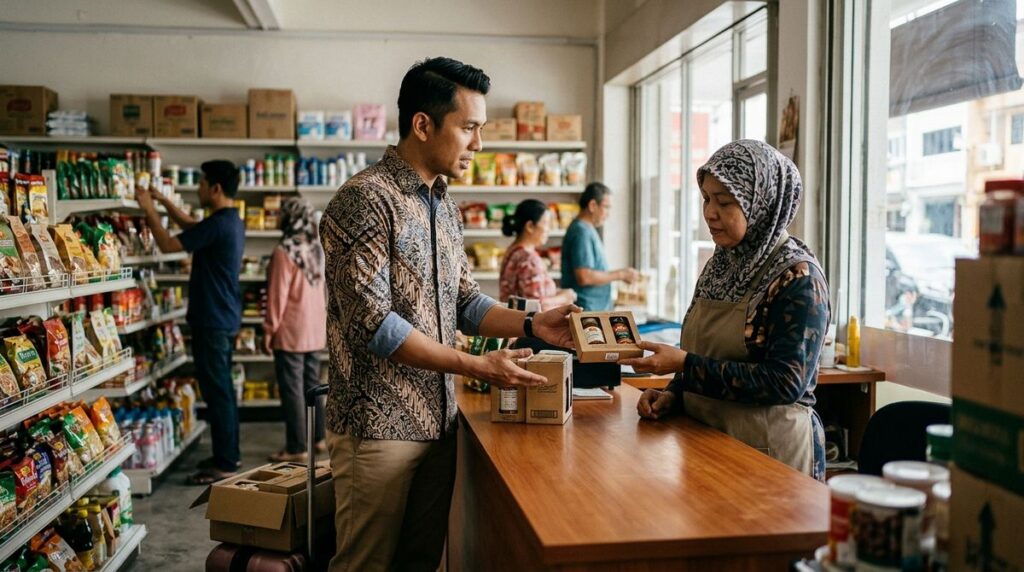
Selling direct to retailers in Malaysia means supplying shops yourself, with no distributor in between. You can do it alone, but only if your brand passes two tests, and most new entrants fail at least one.
Key takeaways
- Direct is wholesale supply, not MLM and not D2C e-commerce.
- Direct does not automatically mean a higher margin.
- Go direct in a tight territory with essential products, then let sell-through data decide the distributor question.
What selling direct to retailers in malaysia means, and how it differs from the alternatives
Malaysia’s retail market is worth about USD 86.5 billion, and food, beverage and tobacco hold 62.6% of it. Selling direct means your brand supplies pharmacies, mini markets, provision shops (family-run neighbourhood grocers), baby stores and chains itself. Search results mix this up with direct selling (multi-level marketing) and D2C online stores. Neither applies here.
There are four routes to a retail shelf:
| Route | Control | Margin kept | Working capital | Coverage |
|---|---|---|---|---|
| Direct | High | Highest per unit | High | Only what you can service |
| Distributor or wholesaler | Medium | Lower per unit | Low | Wide |
| Consignment | Medium | Paid only after sale | Very high | Narrow |
| Marketplace or reseller | Low | Varies | Low | Wide online, thin offline |
Direct does not always mean more profit. You keep the distributor’s margin, but you also take on its costs. Peninsular Malaysia holds 84.1% of market share, so coverage is the real question. Serving the peninsula alone is realistic. Serving Sabah and Sarawak alone usually is not. We cover this trade-off in more depth in going direct versus using a distributor.
Two tests a brand must pass before going direct
Our recommendation rests on two principles: the margin must survive without a distributor, and the brand must be able to deliver and comply every week, not just at launch.
Test one: does the margin structure survive without a distributor?
Work back from the shelf. Here is an illustrative example, not market data. A product sells at RM10.00 on the shelf. The retailer buys at RM8.00. A distributor buys from you at RM7.00. Going direct, you sell at RM8.00 and gain RM1.00 per unit. That gain disappears if delivery, sales staff, returns and bad debt cost more than RM1.00 per unit.
Removing the distributor also hands you minimum order quantities, payment terms, returns and credit risk. Base credit decisions on the retailer’s profitability, not its debt: Springer research on 303 Malaysian SMEs found profitability predicts risk better than leverage does.
Retailers will push back on terms. The minimum wage rose to RM1,700, and 79.5% of businesses report higher costs under the expanded SST. Expect requests for longer payment periods and promotional support, and price for them before you quote.
Test two: can the brand deliver, comply and sustain service?
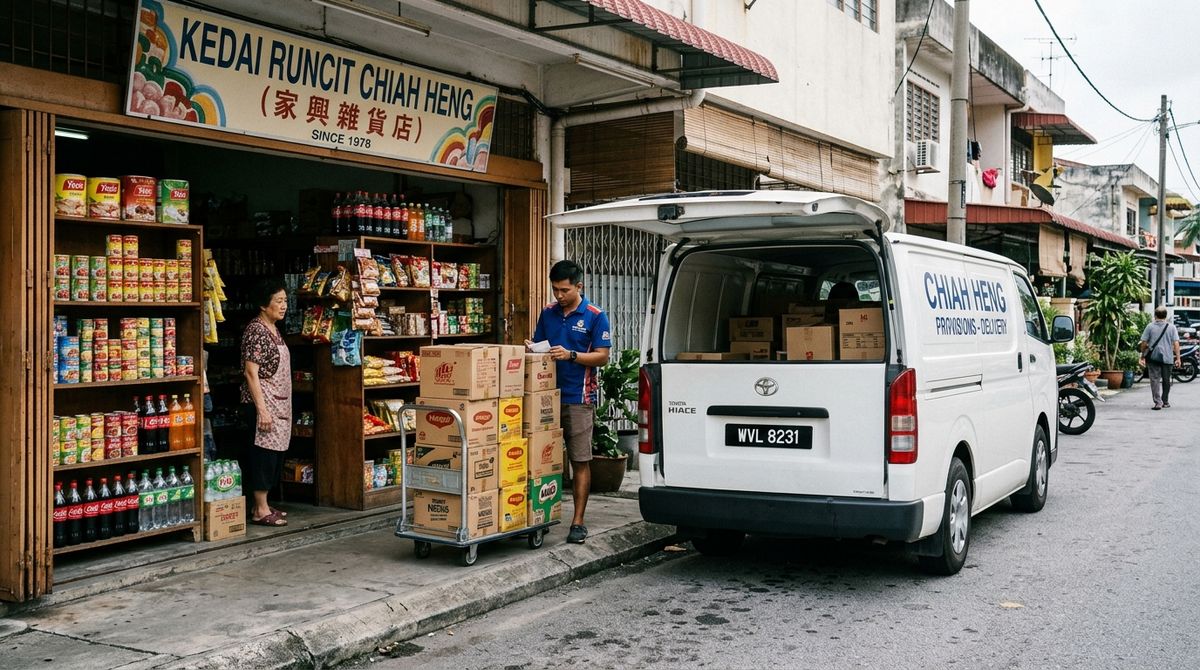
Delivery is the second filter. Mini markets and pharmacies reorder in small, frequent drops. A weekly truck route inside the Klang Valley (Kuala Lumpur and Selangor) is manageable. Sabah and Sarawak face long routes that raise landed costs, so they need regional partners.
Compliance comes before any order. Food, cosmetics and health products need approval or registration with the relevant authority (check with KKM/NPRA). Labels need Bahasa Malaysia. Halal products need JAKIM certification. Business and SST registration must be in place (confirm with the Royal Malaysian Customs).
Chains raise the bar further. 99 Speedmart runs 3,037 outlets and a 63,000 sq ft distribution centre in Semenyih, so buyers at that scale expect central-warehouse delivery, not store-by-store drops. One advantage: DuitNow QR and zero merchant discount rates make payment easier for small retailers.
Where going direct wins, where a distributor wins, and the recommendation
Chains and independents buy differently. At chains, category managers and central buyers vet suppliers before ranging a product. Independents decide in a single conversation and will trial a product quickly. Modern and traditional trade are different games, and independents are the easier first target. Buyers reject suppliers for three reasons: missing compliance paperwork, weak sell-through support and unreliable delivery.
The decision rule is simple:
- Essentials brands (personal care, home care, baby, F&B, pet) with a footprint clustered in the Klang Valley, Penang or Johor Bahru: go direct to independents and pharmacies.
- Brands needing national chain and East Malaysia coverage: use a distributor, or a hybrid.
- Established brands unhappy with a distributor: take back the accounts that justify direct service, and keep the rest on a clear distribution agreement.
Watch channel conflict. If you sell online or direct, keep pricing consistent and set a minimum advertised price, or you undercut the very retailers you are courting. Your first deliverable is a retail sales kit: line sheet, price list, samples and trade terms.
The recommendation: start direct in one defined territory with a defined set of essential SKUs. Track sell-through and repeat orders over a fixed period, then decide the distributor question with that data. Once the numbers show where direct service stops paying, our partnerships team can help you plan the rest: talk to us.