
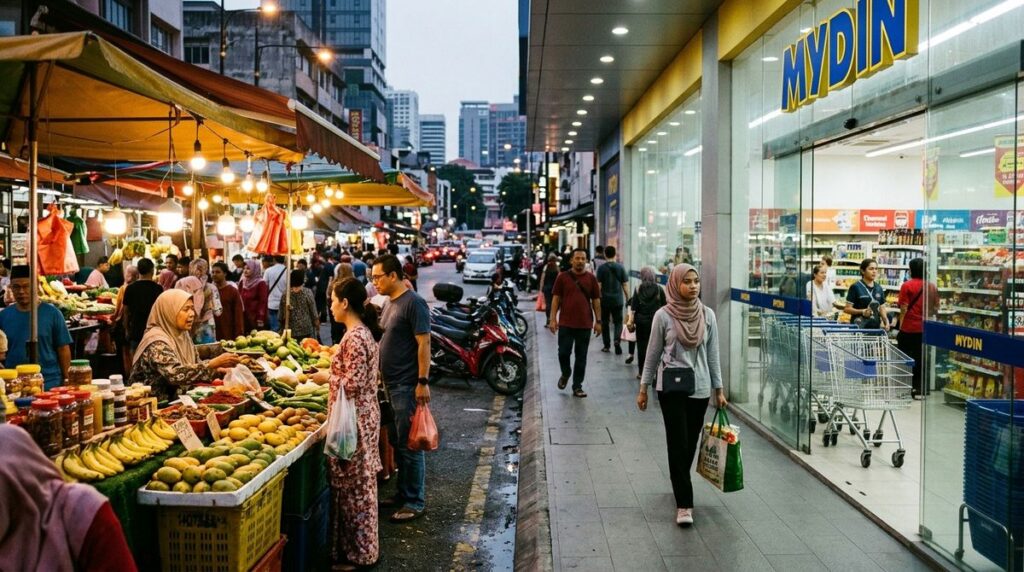
Modern trade vs traditional trade in Malaysia comes down to who buys a product and how: a chain’s central buying team, or tens of thousands of independent shop owners served through wholesalers. The choice sets a brand’s margin, cash cycle and coverage in its first year, and we see brands misjudge it more often than they get it right.
Key takeaways
- Modern trade is chain retail with central buying. Traditional trade is independent shops served by distributors.
- Both channels coexist. Neither is replacing the other.
- Modern trade delivers scale and data. Traditional trade delivers reach and frequency.
- Entry order depends on product type, budget and brand stage.
- The distributor’s proven coverage matters more than its promises.
What modern trade and traditional trade mean in malaysia
Channel choice decides a brand’s margin structure, its cash cycle and how much of Malaysia it can reach. A wrong first move costs a launch year, because listing fees, stock and distributor commitments are hard to unwind once signed.
Modern trade is organised, chain-based retail with centralised buying. A buying team at head office decides what gets listed, at what price, on which shelf and for which promotion. Aeon, Giant, Lotus’s and Mydin are the familiar names.
Traditional trade is independent, owner-operated retail served mostly through wholesalers and distributors. That means provision shops (small neighbourhood grocers, also called sundry shops or kedai runcit), mamak stalls, wet-market stalls, pasar malam traders and Chinese medical halls (independent traditional medicine and wellness shops). Each owner decides what to stock, usually on the spot.
The two channels coexist. One is not replacing the other, and any plan that treats either as a relic of the past misreads the market.
How malaysian firms and researchers use the terms
Distributors use “traditional trade”, “general trade” and “GT” interchangeably. Researchers and government bodies more often say “traditional retail” or “traditional food outlets”, and their definitions lean towards fresh food and grocery. We use “traditional trade” and “modern trade” throughout this article, and “GT” means the same as the former.
Where the borderline formats sit
Hypermarkets (Aeon, Giant, Lotus’s, Mydin), convenience chains (7-Eleven, KK Mart) and mini-market chains such as 99 Speedmart all run central buying and standard operations. So do pharmacy chains and baby and specialty store chains. Independent mini-markets do not, and they belong with traditional trade.
Our classification rule is simple: central buying, standard operations and a formal listing process mean modern trade. Ownership of a single shop by a family, buying through a wholesaler, means traditional trade.
The channel split today: what the data supports
Research cited by Chamhuri and colleagues put traditional food-retail formats at roughly 25% of Malaysia’s retail sales, while the number of traditional food stores was falling. Treat that as directional and historical. No current, authoritative national split between modern and traditional trade exists, and DOSM wholesale and retail data is the reference to check before anyone quotes a share.
The store counts show the same direction. Holst’s analysis of Malaysia’s retail census data found that small groceries fell 15% to 45,353 in the decade to 2000, the first decline of its kind, while supermarkets grew 90% to 738.
That creates the declining-store paradox: fewer outlets, yet still a meaningful share of sales. The explanation is consolidation. Weak shops close, and the survivors tend to be larger, better located or more specialised.
Geography completes the picture. Wet markets and traditional grocers stay competitive in rural areas and small towns, but lose share in larger towns and cities. The data supports “both channels, different places”, not “one channel wins”.
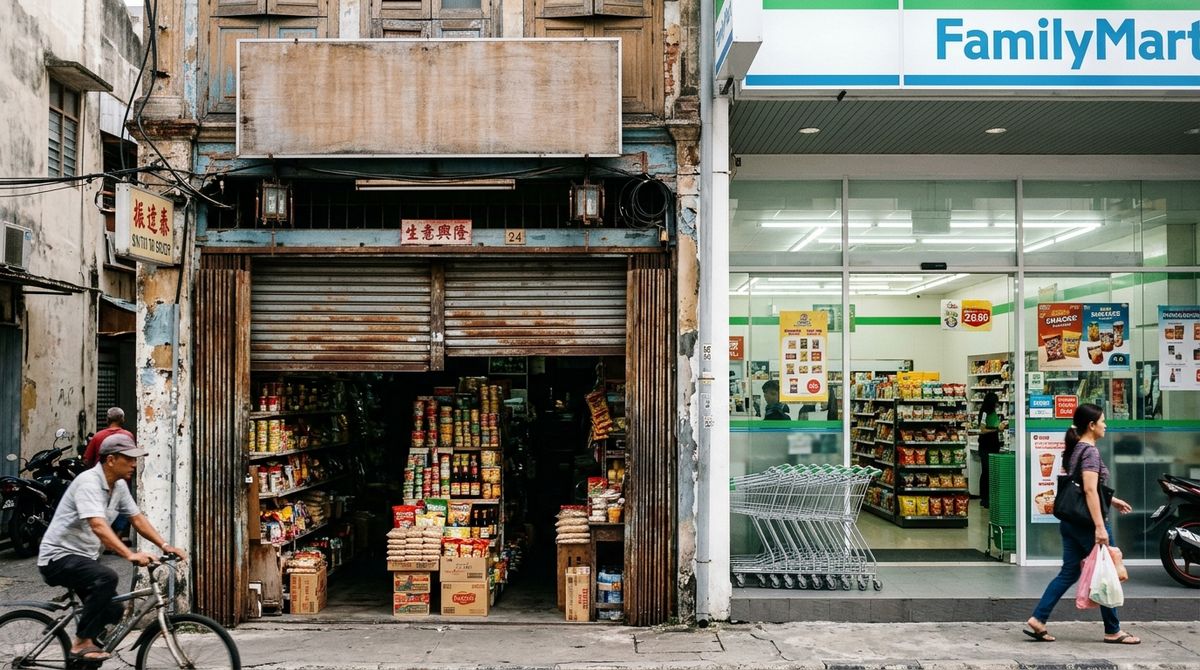
Modern trade vs traditional trade in malaysia: side-by-side comparison
We do not publish margin percentages or fee amounts here, because they vary by retailer, category and negotiation, and a quoted range would mislead more than it informs. Everything below is typical, not universal. Brands should request exact terms in writing from each retailer or distributor.
| Factor | Modern trade | Traditional trade |
|---|---|---|
| Outlet examples | Aeon, Giant, Lotus’s, Mydin, 7-Eleven, 99 Speedmart, pharmacy chains | Provision shops, mamak stalls, wet-market stalls, pasar malam traders, Chinese medical halls |
| Buying model | Central buying team, formal listing | Owner decides, orders via salesperson, van or wholesaler |
| Trade margin | Negotiated per account, under pressure from the chain’s buying power | Layered across distributor, wholesaler and shop |
| Listing and entry fees | Common, set by the chain | Rare, no formal listing |
| Promotional spend | Brand funds calendar slots, displays and discounts | Volume incentives, display support, small trade offers |
| Payment terms | Longer, set by the chain | Shorter, often cash or short credit |
| Minimum order | Set per delivery point or distribution centre | Small, often a few cartons |
| Returns and consignment | Formal rules on damages, expiry and slow sellers | Informal, handled by the distributor |
| Data visibility | Sell-through and loyalty data, varies by chain | Limited, mostly distributor reports |
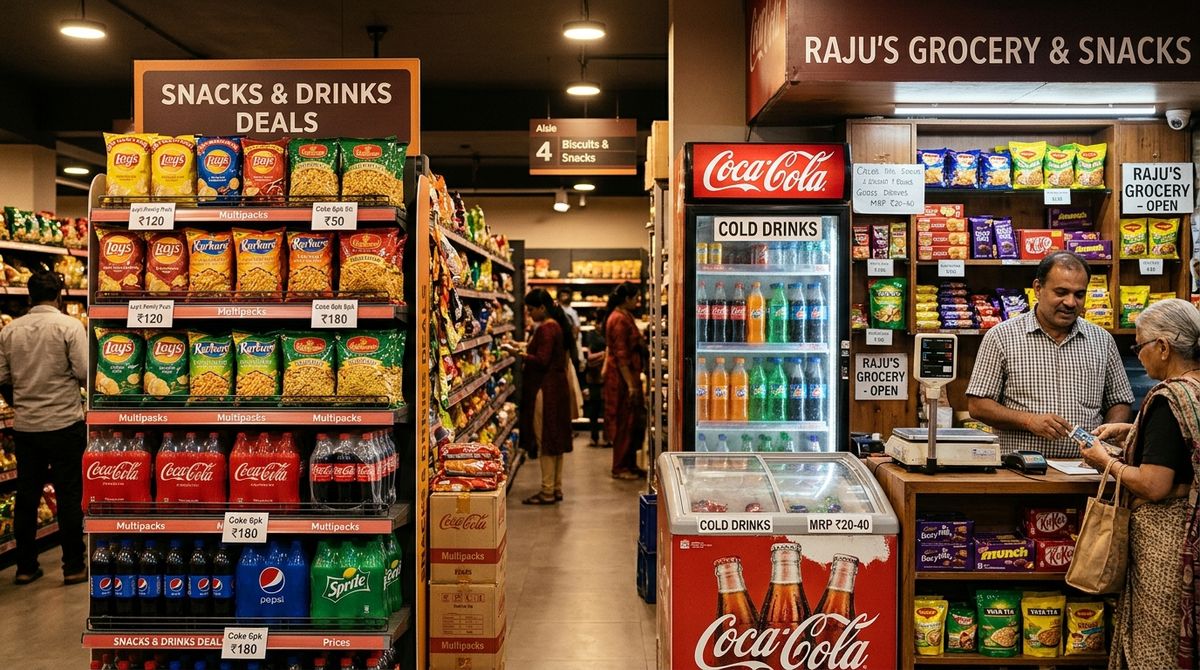
| Pack sizes | Family packs, multipacks, premium variants | Small, affordable, single units |
| Replenishment frequency | Scheduled, by purchase order | Frequent, often weekly or more |
Trade promotion works differently in each channel. Modern trade runs on structured promotional calendars: slots are booked months ahead, and the brand funds the discount, the display or both. Traditional trade runs on volume incentives, such as a free carton on a set quantity, and on display support like shelf strips and branded coolers. The first rewards planning. The second rewards salesperson frequency.
Strengths and limits of each channel
We judge each channel against three business outcomes: reach (how many shoppers the product can meet), margin quality (what the brand keeps after fees and incentives) and cash flow (how fast sales turn into money). Neither channel wins all three.
Modern trade: scale, standards and data
Centralised procurement means one listing decision opens many outlets. Pricing, packaging and planograms are standard, availability is more reliable, and chains with loyalty programmes produce sell-through data that no sundry shop can. Cold-chain and compliance systems are stronger, and a chain can run a national campaign in a single week.
That makes modern trade effective for branded packaged food, beverages, household goods and personal care. Premium products belong here because the shelf environment supports the price.
The costs are real. Listing fees, promotional funding and longer payment terms all hit cash flow before the first reorder. Decisions are centralised, so a rejected line stays rejected, and low-volume or regional lines get little flexibility.
The trade-off is national reach against negotiating pressure on margin. Modern trade is not always the right first channel. A brand without promotional funding or working capital can win a listing and lose money on it.
Traditional trade: proximity, flexibility and relationships
Traditional shops sit in every neighbourhood, including small towns and rural areas that chains skip. Shoppers buy daily top-ups close to home. Shops stock small packs, and relationship-based credit between owner and salesperson keeps orders flowing.
Local knowledge also matters. A good salesperson knows which shop sells the most baby wipes on the first week of the month and which stall needs a second reorder before Friday.
The limits are equally clear. Orders are small, inventory systems are weak, merchandising is inconsistent, data is thin and individual shops hold little bargaining power. Each outlet is a small account, so scale only comes from covering thousands of them.
The channel also faces competition from convenience chains, supermarkets and online grocery. A brand relying on traditional trade alone is exposed to that shift in shopper habits.
How products reach a sundry shop: the distributor and wholesaler chain
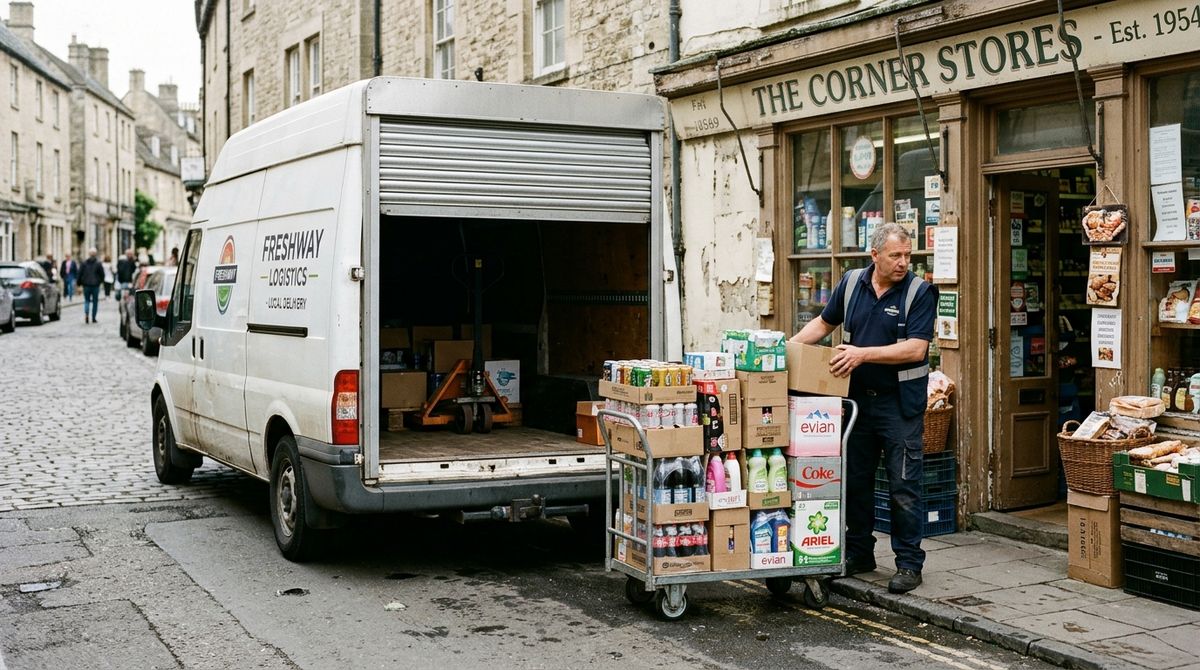
The chain runs brand to distributor, then to a sub-distributor or wholesaler, then to the provision shop, mamak stall or wet-market stall. Each link breaks bulk into smaller lots and carries stock, credit and delivery.
Coverage is built through three mechanisms. Salesperson routes visit each outlet on a fixed cycle, take orders and check stock. Van sales carry stock on the truck and sell and deliver in one visit. Replenishment cycles, weekly or fortnightly by outlet type, keep shelves full without overstocking a small shop.
This is the section that matters most for a brand seeking or replacing a distributor, because traditional trade coverage is not bought through a listing. It is built, route by route. At Lim Soon Huat Group, we run 80+ sales reps, 25 merchandisers and a fleet of 30+ trucks from four distribution centres in Kepong, Sungai Buloh and Kuantan, reaching 12,000+ retail doors across 9 channels. Direct coverage is the Central Region and Pahang, with the rest of Peninsular Malaysia served through managed distributor partners. We cover retail only, not food service or HoReCa.
Whether a brand needs this chain at all is a separate question, which we answer in our guide on whether an FMCG distributor is necessary in Malaysia.
Who sets the price and who carries credit risk
Every step in the chain takes a margin: the distributor, the wholesaler and the shop. A brand’s recommended retail price holds where each layer keeps its margin. It leaks where a wholesaler undercuts to clear stock or a shop discounts to win footfall.
Credit risk sits with the distributor, who funds credit to shops and collects it. A distributor with weak collection discipline either starves routes of stock or pays the brand late, and in both cases the brand’s revenue suffers.
The recommendation is to evaluate five points: route coverage, verified outlet count, data reporting, collection record and compliance. Warning signs of an underperforming distributor usually show up in these five before they show up in sales.
Regional and demographic differences
The urban Klang Valley (Kuala Lumpur and surrounding Selangor) is dominated by modern chains and e-commerce for planned shopping. Consumers there compare promotions, buy in larger baskets and visit traditional shops mainly for top-ups.
East Malaysia and the rural states are different. Traditional shops carry more weight, and logistics cost more per carton because of distance, road conditions and smaller drops. Brands planning East Malaysia need a dedicated route plan, not an extension of a Peninsular one.
Provision shops also differ by ownership. Bumiputera-owned and Chinese-owned shops often use different supplier networks, ordering habits and relationship norms, and a salesperson who earns trust with one group does not automatically earn it with the other. The practical answer is a field team that reflects the outlets it serves, not a single sales script.
Halal and cultural considerations apply in both channels. Chains check halal status at listing, and many Malay-owned shops will not stock a food or personal care product without it. Imported brands should review how JAKIM halal certification works before choosing a channel, as certification affects which outlets a product can enter.
One point anchors all of this: location and shopping mission divide the channels more than income does. A high-income household in a small town still buys daily top-ups from the nearest provision shop.
How the channel split differs by product category
Existing research concentrates on fresh produce and grocery. Our experience across retail categories shows a different pattern for each.
Premium personal care, baby care and pharmacy-led health products skew to modern trade. Shelf standards, staff advice and the shopper’s willingness to pay more all favour chains and pharmacies. Baby and specialty stores sit here too.
Staples, beverages, snacks and low-price household items depend on traditional trade. They are bought often, in small packs, close to home, and the volume lives in thousands of small outlets.
Home care splits by price point: value brands move through provision shops and mini markets, while premium formats go to hypermarkets. Pet care is mainly a modern trade and specialty category, with growing online share. Food and beverage splits by price and pack size, with single-serve and everyday items in traditional shops and multipacks in chains.
Refrigeration, shelf life and price point change the answer. A chilled product needs coolers, which most small shops lack, and a short shelf-life product needs fast replenishment. A premium price needs a shelf that signals premium.
Where online and digital channels fit
Shopee, Lazada, TikTok Shop and quick commerce behave like modern trade channels. They give discovery, standard listings and direct consumer data, and they run their own fees, promotional campaigns and price pressure. A brand that treats them as a free extra channel finds that online prices undercut its shelf prices within weeks.
Traditional shops are digitalising as well. DuitNow QR and e-wallets are now common at the counter, and B2B ordering apps let owners reorder without waiting for a salesperson. For distributors, that means better order data, more frequent smaller orders and a clearer view of what sells by outlet.
The effect on brands is practical. A distributor with digital ordering and reporting gives the brand visibility it could not get from a paper order book. An online-first launch does not replace distribution, but it does tell the brand where demand exists before it commits to a route plan.
Regulation and policy that affect each channel
Retail policy has shaped the two channels directly. In 2003, the government placed a five-year ban on new hypermarket construction in Johor, Klang Valley and Penang. In 2004, it redefined a hypermarket as above 5,000 m² and barred new foreign direct investment in retail spaces under 2,000 m². Policy has protected small retail before and can do so again, so rules need checking at the time of entry.
Practitioners should check five areas with the relevant authority: hypermarket and retail-format guidelines, foreign-ownership and retail licensing rules, price-control and subsidised-goods rules that touch traditional shops, labelling and halal compliance, and support schemes for small retailers. The Ministry of Domestic Trade and Costs of Living (KPDN) is the starting point for most of these. Brands should verify requirements with KKM/NPRA for health and personal care products, JAKIM for halal and Royal Malaysian Customs for imports. We do not give legal or regulatory advice.
Before signing a distributor or a chain listing, a foreign brand needs product registration or notification where required, correct Malaysian labelling, halal certification where relevant, a local importer of record and a written agreement. The clauses that matter in a distribution agreement should be reviewed with a lawyer before anything is signed.
How to choose your entry channel: a decision framework
Three decision drivers settle the first move: product type (premium, mass or chilled), budget (promotional funding and working capital) and brand stage (new to market, challenger or established). The matrix below applies them.
| Situation | Start with | Add next |
|---|---|---|
| Premium or imported, funded for promotions | Selected modern trade and online | Distributor-led traditional trade in key areas |
| Mass-market, everyday price | Distributor-led traditional trade | Convenience and mini-market chains |
| Challenger brand, limited budget | One-region pilot in both channels | Scale region by region |
| Chilled or short shelf life | Modern trade with cold chain | Traditional outlets with coolers |
Sequencing entry: which channel first, which second
Premium and imported brands start with a small set of modern trade listings and online. Time-to-value is fast, because chains deliver visibility and data in weeks. The cash-flow cost is listing fees and longer payment terms, so the brand needs working capital for the first two reorders.
Mass-market and everyday-price brands start with a distributor-led traditional trade build. Time-to-value is slower, as routes take months to fill. But cash comes back sooner, because shop payment terms are shorter, and volume builds outlet by outlet.
Challenger brands run a pilot in one region before scaling. Pick a region where the distributor has proven coverage, run both channels, and measure repeat orders per outlet before expanding. A pilot costs less than a national launch that fails, and it produces the data a chain buyer wants to see.
The sequence for any brand is the same in principle: start where the product fits and the cash cycle is survivable, then add the second channel once the first is stable. Those weighing a distributor against selling alone can read about going direct versus using a distributor.
Running two channels without conflict
Conflict between channels comes from price and pack. The recommendation is to build four controls.
First, set channel-specific pack sizes and price points: small packs for traditional trade, multipacks and bundles for modern trade. Second, build a price architecture that prevents arbitrage, so a wholesaler cannot buy at the shop price and resell to a chain below its cost. Third, segment outlets by role: location, traffic, refrigeration and promotion capability. Fourth, set execution standards for each channel.
In modern trade, execution means planogram compliance, shelf availability and promotional displays. In traditional trade, it means visibility, branded coolers, stock rotation and simple merchandising materials. Merchandisers verify both on every visit.
Common misconceptions and questions
Is traditional trade disappearing? No. Store numbers are declining, but traditional formats still hold meaningful sales, and they hold up best in rural areas and small towns.
Is modern trade always more profitable? No. Listing fees, promotional funding and long payment terms can erase the margin. Profitability depends on the brand’s cost to serve each account.
Can a new brand skip traditional trade? A premium brand can start without it. A mass-market brand cannot, because the volume sits in small outlets.
Do hypermarket listings guarantee sell-through? No. A listing gives shelf space, not demand. Without promotion and merchandising support, stock sits and returns follow.
Does an online-first launch replace distribution? No. Online builds discovery and data, but physical availability still drives most everyday purchases.
Which channel suits a first shipment? The channel that matches the product’s price and the brand’s cash position. For most mass-market products, that is traditional trade through a distributor. For premium products, it is selected modern trade.
Our recommendation: match the channel to the shopping mission
Modern trade delivers scale, standards and data. Traditional trade delivers proximity and reach. Brands should pair the two, matched by geography, shopping mission, pack size and price point, and choose a distributor that can prove coverage in both.
The next step for a brand owner is an audit of the distributor’s actual outlet coverage, collection record and reporting before signing or renewing. Ask for outlet lists by area, ageing reports on shop credit and a sample of the sell-through data the brand will receive.
For brands that want to test that standard with us, our partnerships team is available through our partnership page.